
A prospective patient comparing chiropractors on Google may make an initial judgment before ever reaching your website.
They may see your location, reviews, office hours, category, photographs, contact information, and appointment options directly in Google Search or Maps. Missing or outdated details can create uncertainty at exactly the moment someone is deciding which practice to investigate further.
That makes Google Business Profile an important part of local SEO for chiropractors.
But local visibility involves more than completing a profile once.
A chiropractic practice needs accurate categories, current services, genuine photographs, responsible review management, consistent business information, and ongoing attention as the clinic changes.
Google says local rankings are mainly based on relevance, distance, and prominence. Clinics cannot control every factor, particularly the searcher's location, but they can improve the accuracy, usefulness, and credibility of the information they provide.
This guide gives chiropractic practices a practical Google Business Profile checklist for strengthening local visibility and helping prospective patients evaluate the clinic more easily.
Why Google Business Profile Matters for Chiropractic Clinics
Google Business Profile connects local searchers with essential information about a practice.
Someone searching for chiropractic care may want to know:
whether the clinic is nearby
when it is open
how to contact the office
which services are offered
who the practitioners are
whether appointments are available
what other patients say about the practice
A well-maintained profile can provide several of those answers before the person visits the website.
It can display the business category, location, phone number, website, operating hours, reviews, photographs, and other patient-facing information.
The profile should make it easier for someone to understand the clinic, not simply provide another place to insert keywords.
Google Maps Visibility Depends on More Than Keywords
Google's local ranking system primarily evaluates relevance, distance, and prominence.
Relevance reflects how closely the business matches what someone searched for.
Distance considers how far the business is from the searcher or location used in the query.
Prominence reflects how well known or established Google understands the business to be. Google specifically references signals such as links, review count, and positive ratings when explaining prominence.
Repeating chiropractic keywords throughout a profile does not override those factors.
A stronger approach is to accurately represent the practice, maintain the right categories, earn genuine reviews, keep business information current, and support the profile with a useful website.
Choose the Correct Primary and Secondary Categories
Business categories tell Google and prospective patients what a practice primarily is.
Google says the categories selected for a Business Profile affect local ranking and recommends selecting the most specific category that accurately describes the business.
For a practice primarily providing chiropractic care, Chiropractor will generally be the appropriate primary category when it accurately reflects the real business.
Keep the Primary Category Specific
The primary category should describe the business itself rather than every service or condition associated with it.
A chiropractic clinic that provides therapeutic exercises does not automatically become a physical therapy clinic.
A practice that offers massage as part of a broader care plan should not select an unrelated massage-business category unless that category genuinely describes an additional business function.
Google advises businesses to choose the fewest categories needed to describe their core business.
The profile should make the clinic easier to understand, not broader than it really is.
Add Secondary Categories Only When Appropriate
Secondary categories can describe additional genuine business functions.
Google currently allows businesses to select a primary category plus additional categories, but those categories should still accurately reflect the business.
Do not add unrelated medical categories simply to appear for more searches.
The clinic's categories should align with its practitioners, actual services, website content, and real-world operations.
Optimize Chiropractic Services and Business Descriptions
Google Business Profile can display service information that helps prospective patients understand what a clinic provides.
For chiropractors, the services section should reflect treatments and evaluations actually available at the practice.
It should not become a list of conditions the clinic hopes to rank for.
Describe Services in Patient-Friendly Language
A chiropractic practice may offer services such as:
initial chiropractic evaluations
spinal manipulation
mobility assessments
therapeutic exercise instruction
follow-up examinations
other services within the practitioners' professional scope
Names and descriptions should be straightforward.
For example, an initial chiropractic evaluation can explain that the visit may include reviewing relevant history, discussing symptoms, performing an appropriate assessment, and determining suitable next steps.
Avoid statements promising guaranteed relief, permanent outcomes, or cures that are not supported by reliable evidence.
Service descriptions should help prospective patients understand what happens, not pressure them with exaggerated claims.
Write a Clear Business Description
Google allows a Business Profile description of up to 750 characters.
Google says the description should focus on useful information about the business and should not include URLs, HTML, or promotional information such as deals, prices, or sales.
A chiropractic clinic can use this section to explain:
what the practice offers
its approach to patient care
how long it has operated
relevant clinic characteristics
other useful factual information
Claims about years in practice, professional qualifications, specialized services, or credentials should be accurate and verifiable.
Use Photos to Build Confidence Before the First Visit
Photographs help prospective patients understand what the clinic looks like before arriving.
That can be especially useful for someone visiting a chiropractic practice for the first time.
Real images can show the entrance, reception area, treatment rooms, consultation spaces, equipment, and professional team.
Google requires Business Profile photos and videos to comply with its content policies and applicable laws.
Show the Real Practice Environment
Use photographs that accurately represent the current clinic.
Exterior images can help patients identify the building.
Reception images can show the waiting environment.
Treatment-room photos can help someone understand the physical setting.
Professional photographs of chiropractors and staff can also make the practice more familiar before the appointment.
Avoid relying entirely on generic stock images.
Stock photography may illustrate chiropractic care, but it does not help a prospective patient understand the actual clinic they may visit.
Protect Patient Privacy
Healthcare practices need additional care when publishing photographs.
Do not show identifiable patients receiving treatment without the appropriate permission and authorization.
Avoid images containing:
patient charts
appointment schedules
computer screens showing private information
medical forms
other identifiable patient information
Where patient images or stories are used for marketing, the practice should follow applicable HIPAA and other privacy requirements.
For routine Business Profile photography, the lowest-risk approach is usually to focus on the physical clinic, equipment, exterior, and authorized staff.
Develop a HIPAA-Conscious Google Review Strategy
Reviews influence how prospective patients compare chiropractic clinics.
Google also states that review count and positive ratings can help local ranking.
Healthcare practices, however, cannot manage reviews exactly like a restaurant or home service company.
Patient privacy still matters after someone posts publicly.
A person disclosing their own medical experience in a review does not automatically authorize the clinic to disclose protected information in its response.
Invite Voluntary Reviews Without Pressure
Chiropractic clinics can ask patients for genuine reviews.
Google allows businesses to share a direct review link or QR code with customers.
The request should remain neutral and voluntary.
Google specifically prohibits businesses from:
offering incentives in exchange for reviews
discouraging negative reviews
selectively soliciting only positive feedback
pressuring customers to leave reviews while on the premises
requesting specific content in the review
These rules are part of Google's current fake-engagement and rating-manipulation policies.
The goal is authentic feedback, not manufactured ratings.
Respond Without Disclosing Protected Information
Public review responses require restraint.
A HIPAA-covered practice should avoid confirming that a reviewer is a patient or revealing:
diagnoses
treatments
appointment history
payment information
insurance details
private conversations
other protected health information
A safer response generally acknowledges feedback without confirming the relationship and invites the individual to contact the office privately when appropriate.
HHS has previously taken enforcement action against healthcare providers for disclosing protected health information while responding to online reviews.
The practice's desire to defend itself publicly does not override its privacy obligations.
Manage Google Maps Questions and Patient Information
Prospective patients often have practical questions before scheduling.
They may want to know whether the clinic:
accepts new patients
has weekend appointments
offers parking
accepts certain insurance plans
requires an initial evaluation
has accessible entrances
Accurate information reduces uncertainty.
Google began updating its traditional Business Profile Q&A experience in December 2025. Rather than relying only on a long list of historical questions, Google has been moving toward more immediate answers based on owner-provided information, relevant reviews, and existing business answers. Existing published Q&A can still contribute to Google's understanding and may continue to appear in Maps.
This makes accurate business information throughout the profile even more important.
Keep Answers Consistent Across Platforms
The Business Profile, website, booking page, and office staff should provide consistent core information.
If Saturday appointments are available, published hours should reflect that.
If insurance participation changes, the website and profile should not continue presenting outdated details.
If the clinic is no longer accepting new patients temporarily, the appointment process should not imply otherwise.
Review available Q&A information periodically and keep owner-supplied business details current.
Medical questions about an individual's symptoms, diagnosis, or treatment should be moved to an appropriate private clinical conversation rather than answered publicly through Maps.
Build Accurate Local Citations for Chiropractic Practices
Local citations are online references to business details.
For a chiropractic clinic, those details may appear across:
map services
healthcare directories
professional association profiles
review platforms
insurance directories
local business listings
practitioner pages
The most important information generally includes the business name, physical location where applicable, phone number, and website.
Conflicting information can confuse prospective patients.
Keep NAP Information Consistent
NAP stands for name, address, and phone number.
Review these details across the clinic's website, Google Business Profile, important healthcare directories, appointment platforms, and other major listings.
A clinic that moved may still have an old address published elsewhere.
A provider who changed practices may still appear under a former office.
Old marketing vendors may also have created duplicate or outdated listings.
Fix meaningful inconsistencies rather than creating additional profiles.
The purpose of citation work is business clarity and accurate public information, not collecting as many directory links as possible.
Review Practitioner Listings Separately
Individual chiropractors may qualify for their own Google Business Profiles when they satisfy Google's individual-practitioner requirements.
Those profiles should not be duplicated simply to target multiple conditions or treatments.
Google also advises that there should generally be one profile per business rather than duplicate listings representing the same operation.
Practitioner information should remain accurate when:
a provider joins a practice
a provider leaves
a clinic moves
contact information changes
the practitioner's professional affiliation changes
Keeping these details current reduces patient confusion.
Monthly Google Business Profile Maintenance
Google Business Profile is not a one-time setup project.
Google can update Business Profile information using sources such as user reports, public information, and licensed content. Business owners can review many of these updates through their profile.
A monthly review is a practical maintenance cadence for many clinics, though Google does not require every business to review its profile on a specific monthly schedule.
Important changes should be corrected whenever they occur.
Review Business Information and Updates
Regularly check:
practice name
address
map pin
phone number
website
primary category
secondary categories
operating hours
special or holiday hours
services
appointment link
Confirm that the information still matches actual practice operations.
Google may suggest or apply updates when it receives different information from other sources, so review notifications rather than assuming every automated change is correct.
If incorrect information keeps returning, investigate whether an outdated public source may be contributing to the conflict.
Refresh Photographs and Review Performance
Add new photographs when useful changes occur, such as:
renovations
updated treatment rooms
new equipment
changes to the entrance
new authorized staff photographs
Review new patient feedback using the practice's approved privacy process.
Google Business Profile performance data may also provide information about interactions such as website clicks and other profile actions where those metrics are available.
Treat those metrics as signs of interest rather than confirmed appointments.
The more meaningful outcome is whether local visibility contributes to qualified inquiries and actual bookings.
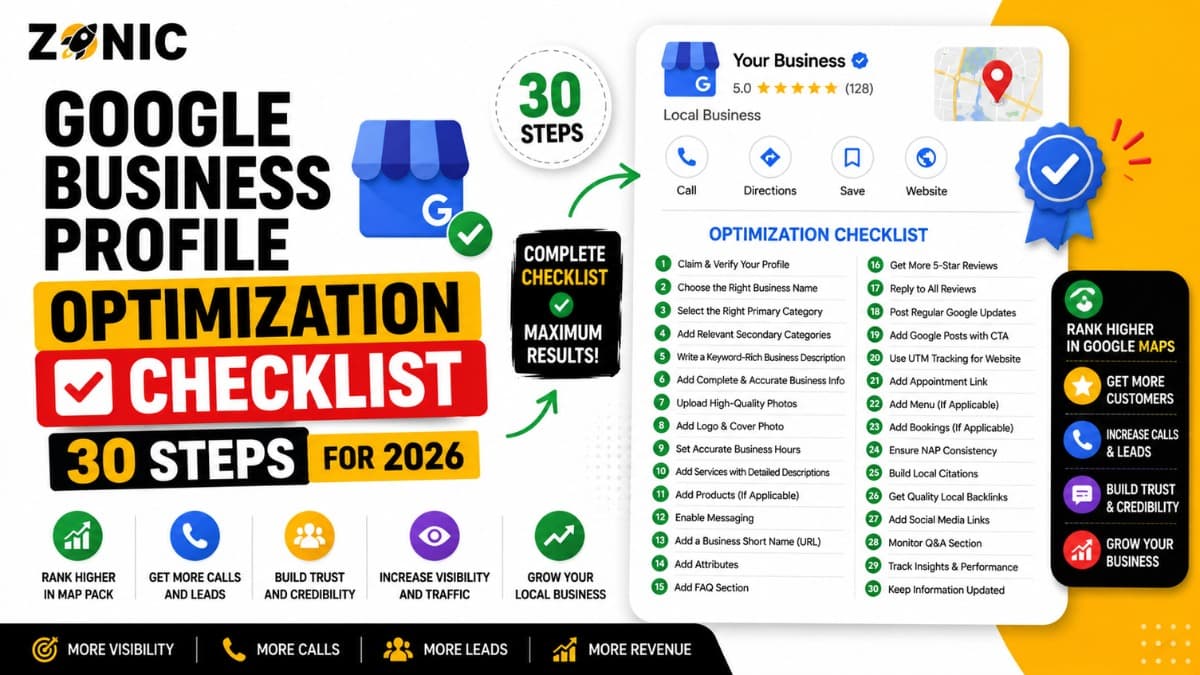
Chiropractic Google Business Profile Checklist
Profile Area | Recommended Action | Why It Matters |
Primary category | Select the most accurate chiropractic category | Helps Google understand the core business |
Secondary categories | Use only for genuine additional business functions | Avoids misleading categorization |
Business description | Explain the practice accurately within Google's rules | Helps patients understand the clinic |
Services | List actual evaluations and treatments | Clarifies available care |
Address and hours | Maintain accurate patient-facing information | Reduces appointment confusion |
Photos | Use authentic office and team images | Builds familiarity and confidence |
Reviews | Request genuine feedback and protect privacy | Supports reputation and local visibility |
Q&A and profile information | Keep current information consistent | Helps patients get reliable answers |
Citations | Correct important NAP and practitioner conflicts | Improves business-information consistency |
Ongoing maintenance | Review changes, access, and performance regularly | Helps identify errors early |
This checklist supports a strong local presence, but no individual profile change guarantees a particular Google Maps or local-pack position.
How Zonic Helps Chiropractic Clinics Improve Local Visibility
Zonic helps chiropractic practices strengthen Google Business Profile accuracy, local search presence, and the connection between search visibility and the clinic website.
The process can include reviewing:
business categories,
practice information,
services,
photographs,
review processes,
important citations,
practitioner listings,
website content,
and nearby competitors.
Zonic also evaluates what happens after someone discovers the clinic.
A strong local profile should lead to accurate treatment information, clear practitioner credentials, accessible appointment options, and a trustworthy website experience.
For healthcare practices, local SEO also needs to account for privacy and responsible marketing.
That means avoiding fake reviews, misleading medical claims, duplicate profiles, unsupported locations, and tactics that create unnecessary compliance risk.
The goal is to help the practice become easier for relevant prospective patients to discover and evaluate.
Conclusion
Google Business Profile optimization cannot guarantee a top Maps position because local results still depend on relevance, distance, prominence, and competition.
What a practice can do is improve the quality and accuracy of the signals within its control.
Zonic Media helps chiropractic practices improve Google Business Profile accuracy, local visibility, clinic website SEO, and appointment conversion through responsible local search strategy. Request a free audit through Zonic's Chiropractor SEO services page, or call (302) 726-9736 to discuss your clinic's needs with Zonic at 8 The Green, Suite B, Dover, DE 19901, serving chiropractic practices across the United States.
Frequently Asked Questions
What is local SEO for chiropractors?
Local SEO for chiropractors is the process of improving a chiropractic practice's visibility for location-based searches in Google Search and Maps. It can include Google Business Profile optimization, categories, services, reviews, accurate business information, citations, practitioner profiles, and relevant website content.
What Google Business Profile category should a chiropractor use?
A practice should select the most specific category that accurately describes its core business. For a practice primarily providing chiropractic care, Chiropractor will generally be the appropriate primary category. Additional categories should reflect genuine additional business functions.
Do Google reviews help chiropractors rank locally?
Yes. Google says review count and positive ratings can help local ranking. Reviews also influence how prospective patients evaluate a clinic. No particular number of reviews guarantees a specific Maps position.
How can chiropractors respond to reviews without violating HIPAA?
HIPAA-covered practices should avoid confirming that a reviewer is a patient or discussing diagnoses, treatments, appointments, payment information, or other protected health information publicly. When follow-up is appropriate, a general response can invite the individual to contact the office privately.
How often should a chiropractic practice update its Google Business Profile?
Update the profile whenever business information changes. A monthly review can be a practical internal maintenance routine for many practices, but it is not a Google requirement. Hours, appointment links, practitioner information, categories, services, photos, and Google-generated updates deserve regular attention.