A customer searches Google for a service your business offers. Your company appears in the results, the customer checks your reviews, visits your website, and eventually calls to request an appointment.
That sounds like a straightforward journey, but several marketing channels may influence the decision.
The customer might first discover your business through a paid Google advertisement. Later, they may search your business name, review your Google Business Profile, and compare your company against nearby competitors before contacting you.
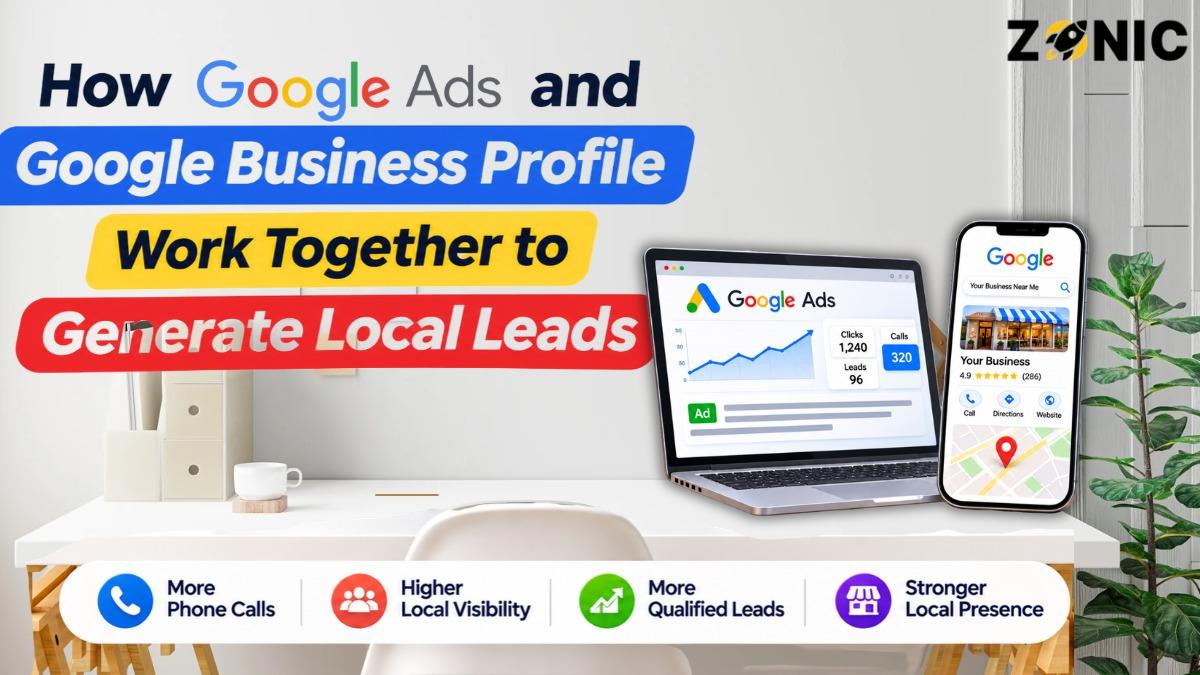
This is why Google Ads and Google Business Profile can work better as connected parts of a local marketing strategy.
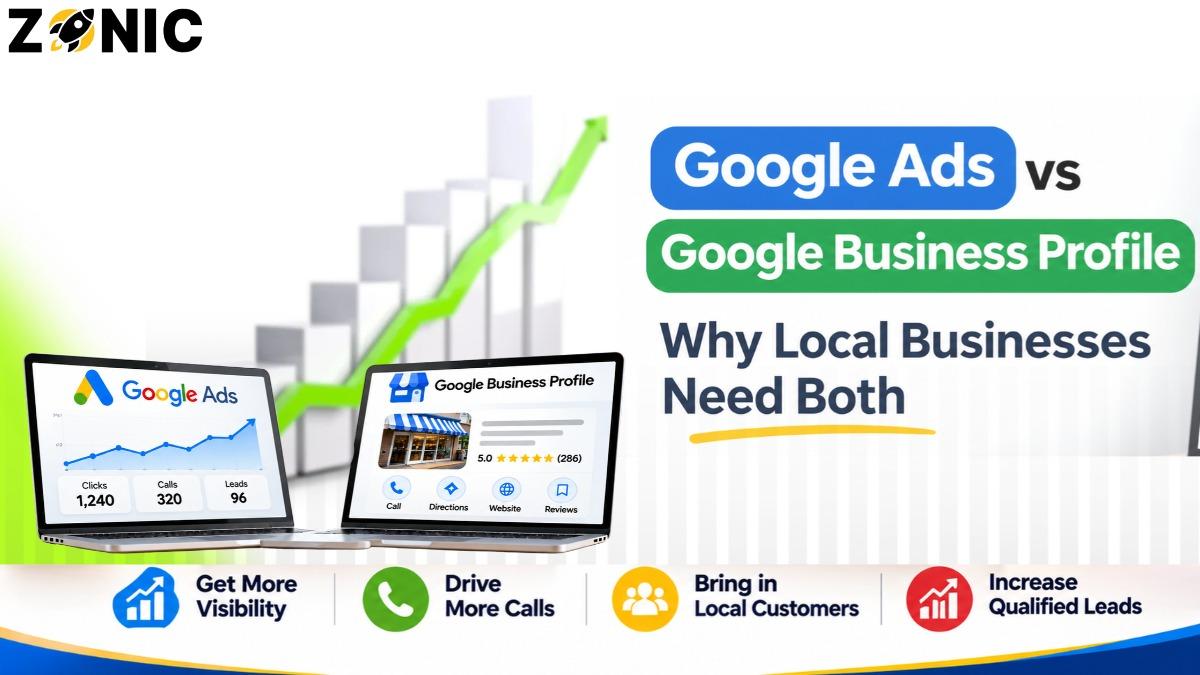
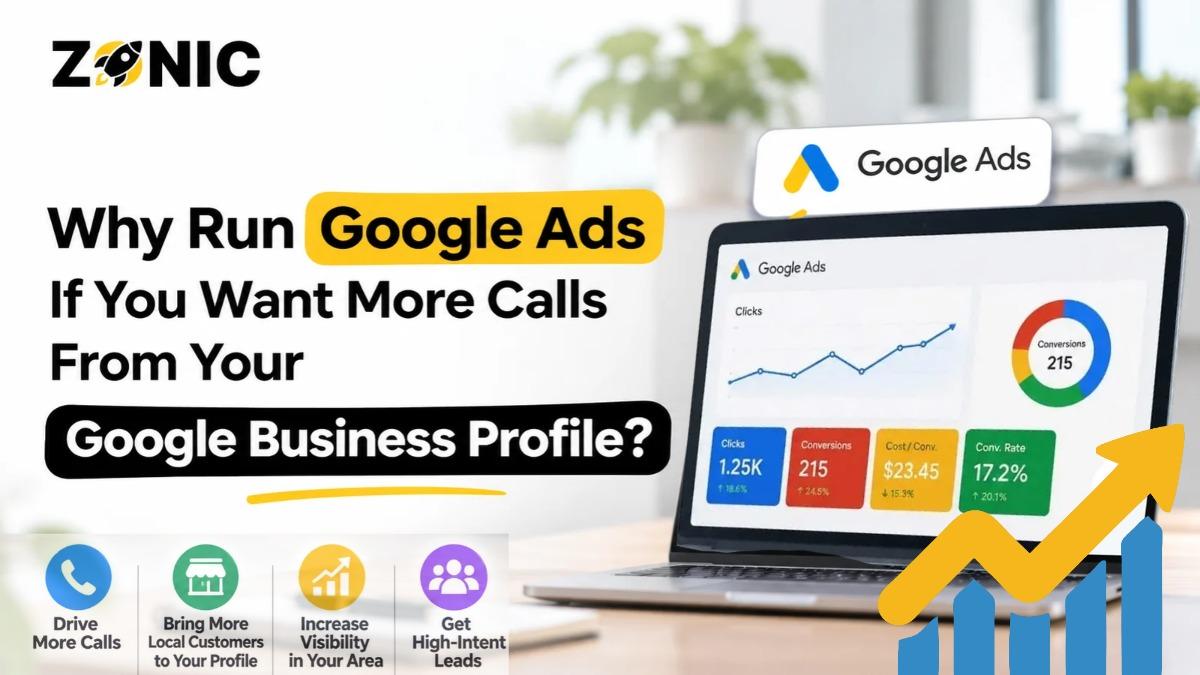
Google Ads helps businesses reach customers through paid advertising. Google Business Profile provides important business information through Google Search and Maps, helping potential customers evaluate a company and contact it.
Each platform has a different role.
Advertising can generate additional exposure for relevant searches, while an accurate Business Profile helps establish credibility through reviews, photographs, operating hours, and contact information.
For plumbers, roofers, HVAC companies, dental practices, auto repair shops, law firms, and other local businesses, combining these channels can improve the customer journey from initial discovery to qualified inquiry.
However, the connection needs to be managed correctly.
Paying for Google Ads does not directly improve organic Google Maps rankings. The advantage comes from increasing relevant visibility, presenting consistent business information, and tracking which interactions lead to customers.
Understanding the Different Roles of Google Ads and GBP
Google Ads and Google Business Profile are separate products, but they support different stages of local customer acquisition.
Google Business Profile helps eligible businesses manage how important business information appears on Google Search and Maps.
Google Ads allows advertisers to compete for paid placements using campaign budgets, targeting settings, and advertising assets.
A customer may encounter either channel independently, or both during the same decision process.
Google Business Profile Supports Organic Local Discovery
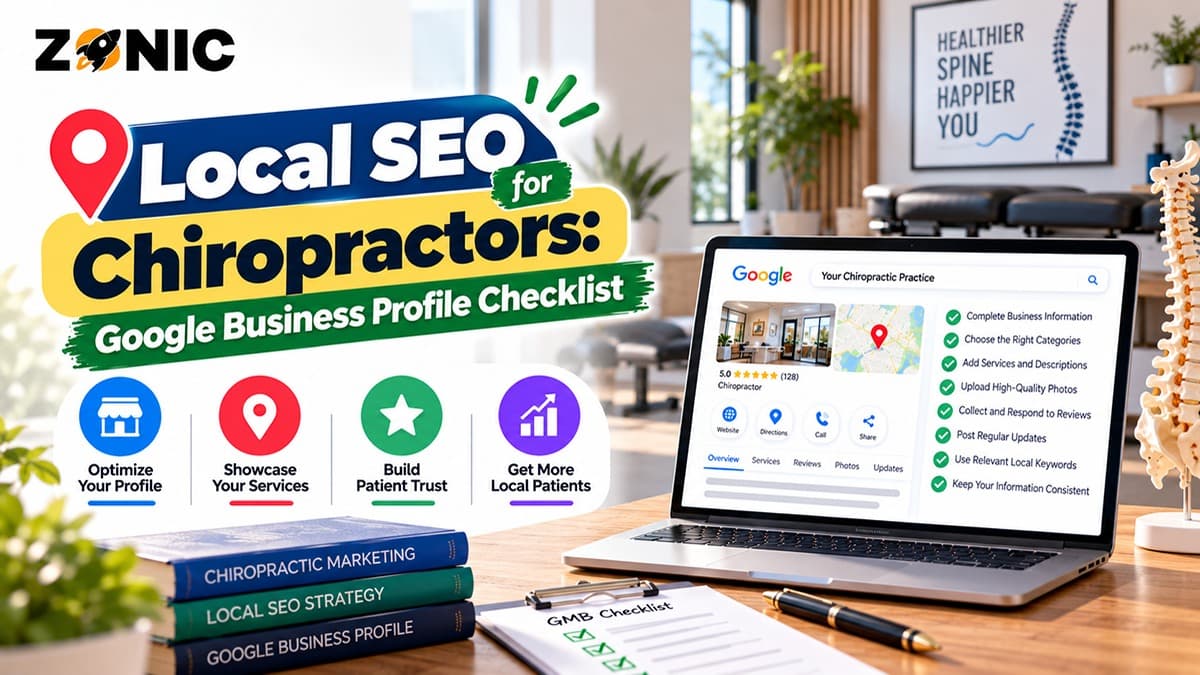
A Google Business Profile can show the business name, primary category, address or service area, telephone number, website, opening hours, reviews, and photographs.
These details help prospective customers determine whether a business is suitable.
Google states that organic local rankings are mainly influenced by relevance, distance, and prominence.
Relevance concerns how closely the business matches the search. Distance reflects the relationship between the business location and the searcher. Prominence concerns how well known or established the business appears.
An accurate profile supports customer understanding, but it does not guarantee a particular ranking position.
Google Ads Provides Additional Paid Exposure
Google Ads can place eligible advertisements in front of customers searching for relevant products or services.
Advertisers can focus campaigns on specific services, geographic markets, and customer intentions.
For example, a roofing company may advertise emergency repairs while continuing to build organic visibility for roof replacement and maintenance.
A dental practice may use paid search to promote appropriate appointment services while maintaining a complete Google Business Profile.
The purpose of advertising is to reach additional relevant customers, not to purchase higher organic rankings.
How Google Ads and Google Business Profile Connect
One of the most important connections between the platforms involves location assets.
Google Ads allows eligible advertisers to link their Google Business Profile and use its information in relevant advertising formats.
This can include information about a business's location, telephone number, opening hours, and other available details.
Depending on eligibility and campaign format, these advertisements may appear across Google Search and Maps.
Location Assets Connect Business Information With Ads
Location assets allow advertisements to incorporate information associated with a real business location.
For businesses with customer-facing offices or storefronts, location information can help people understand where to visit.
Eligible local advertising formats can also support businesses that operate within service areas.
The exact information displayed depends on Google's advertising systems, campaign settings, and the type of business.
Before linking a profile, the advertiser should confirm that the business information is accurate.
An outdated phone number, incorrect address, or misleading operating hours can create a poor experience for customers arriving through paid advertisements.
Use the Existing Business Profile
Businesses should connect their legitimate existing Business Profile rather than create a duplicate listing for advertising.
Google provides options for linking Business Profiles through Google Ads location assets and authorized account access.
The business owner should retain appropriate control over both accounts.
Agencies can be granted relevant management permissions without requiring the business to surrender ownership.
This arrangement helps maintain accurate information across advertising and organic local search.
How Local Ads Help Customers Find Your Business
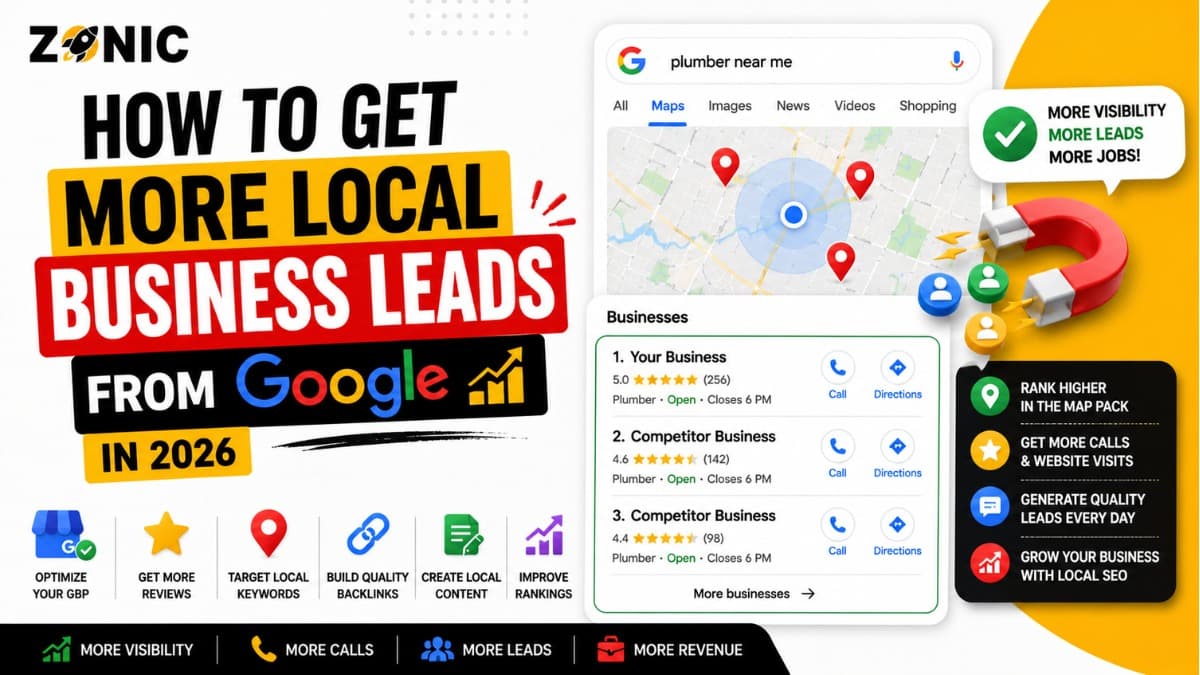
Google's Local Ads can appear across eligible Google properties, including Search, Maps, and Waze.
They are designed to help customers discover businesses and take actions such as calling, requesting directions, or visiting a website.
For local businesses, these actions may be more meaningful than general website traffic.
Paid Maps Visibility Creates Another Discovery Opportunity
Consider a plumbing company serving several nearby neighborhoods.
Its Google Business Profile might rank prominently close to its operating location but appear less frequently in other parts of its service territory.
A geographically targeted advertising campaign may help the company reach relevant searchers in additional eligible areas where it genuinely operates.
This creates another opportunity to generate inquiries without relying entirely on organic map pack positions.
However, paid visibility is not guaranteed for every search. Advertisements remain subject to campaign eligibility, auction conditions, competition, and budget.
Profile Details Help Customers Evaluate the Advertisement
A person seeing a local advertisement may want more information before contacting the company.
Business hours, photographs, reviews, location information, and website details can help answer those questions.
For example, a customer considering an auto repair shop may want to confirm its address and operating hours.
A homeowner considering a roofing contractor may want to review photographs of completed work and customer feedback.
Accurate business information helps the paid advertisement lead into a more trustworthy customer experience.
Turn Search Visibility Into Phone Calls
Phone calls are particularly valuable for businesses where customers need estimates, appointments, emergency assistance, or professional consultations.
Google Ads provides call assets and related reporting features that can help businesses encourage and measure telephone inquiries.
Google Business Profile also offers calling options for eligible listings.
Together, these features create multiple paths for customers to make contact.
Use Call Assets for Relevant Campaigns
Call assets allow eligible advertisements to display calling options.
A customer searching on a supported device may be able to initiate a telephone call directly from an advertisement.
This can reduce unnecessary steps when the customer needs immediate assistance.
A towing company might prioritize emergency roadside inquiries. An HVAC contractor may focus on urgent repair calls. A dental practice may advertise relevant appointment-based services.
The campaign should target services the business genuinely provides.
Match Advertising Hours With Call Availability
A call-focused campaign can waste money if customers repeatedly contact the business when nobody is available.
Businesses should review when their teams can answer calls and schedule relevant call assets accordingly.
A company advertising 24-hour emergency service should genuinely provide the advertised availability.
For professional practices, an appropriate intake process should be available during the campaign's active periods.
Lead generation does not end when someone taps the call button.
The business still needs to answer, qualify, and assist the caller.
Use Google Ads to Reach the Right Local Audience
Advertising becomes more effective when geographic targeting reflects actual customer demand.
A business serving one neighborhood may not benefit from advertising throughout an entire metropolitan region.
Similarly, a service-area company may waste money on inquiries from customers beyond its practical operating territory.
Focus on Genuine Service Areas
A roofing company may serve multiple cities, while a dental office typically depends more heavily on patients willing to travel to its location.
Those businesses need different geographic strategies.
Campaign targeting should reflect where customers can realistically receive service.
An emergency contractor should consider travel times and staffing. A storefront should consider nearby customer demand and accessibility.
The goal is not the largest possible audience.
It is reaching people who are likely to become customers.
Match Search Intent With the Service
Keywords should reflect the reason someone is searching.
A user looking for general educational information may be less likely to call than someone seeking an immediate appointment or estimate.
For example, a search about how an air conditioner works differs from a search for local AC repair.
Paid search campaigns should prioritize relevant commercial searches while using suitable negative keywords to reduce unrelated traffic.
This improves the likelihood that advertising clicks become qualified inquiries.
Why Your Website Still Matters When Using Both Platforms
Some customers call directly from Google Maps or an advertisement.
Others visit the website first because they need more information.
A well-designed website therefore remains important even when the business has an optimized profile and active advertising campaigns.
Align Landing Pages With Advertisements
If an advertisement promotes roof leak repair, the destination page should explain that service.
If a campaign targets plumbing installation, the landing page should address installation rather than send every visitor to a generic homepage.
Relevant landing pages help customers confirm that the business offers what they need.
They should explain the service, provide genuine trust signals, and make contacting the company straightforward.
A confusing page can waste advertising traffic even when the campaign targets appropriate searches.
Make Contact Options Easy to Use
Mobile visitors should be able to find a working phone number, appointment option, or contact form without unnecessary scrolling.
Service businesses may benefit from prominent tap-to-call buttons.
Professional practices may need appointment forms and clear office information.
A strong website should also maintain consistent business details.
If the Business Profile shows one telephone number and the website shows an outdated number, customers may hesitate or contact the wrong place.
Google Ads Data Can Support Local SEO Decisions
Paid advertising and organic local rankings operate independently, but advertising results can inform SEO priorities.
Google Ads provides information about campaign performance, customer interactions, and conversions when the appropriate measurement systems are configured.
Businesses can use these findings to understand which services and locations generate useful inquiries.
Identify Services That Generate Qualified Leads
Suppose a plumbing company advertises drain cleaning, water heater repair, and leak detection.
After collecting reliable performance data, it may discover that water heater repair produces a higher percentage of qualified appointments.
The company could then review whether its organic water heater repair page provides enough information and local relevance.
This does not mean advertising directly improves rankings.
It means the business is using customer demand information to improve its website strategy.
Improve Content Based on Customer Questions
Paid advertising may also reveal recurring customer concerns.
If callers repeatedly ask about service availability, equipment, appointment times, or coverage areas, the website may need clearer explanations.
Those improvements can support both organic visitors and paid traffic.
Strong marketing uses customer feedback to improve content rather than publishing pages solely to target more keywords.
Track Google Ads and Business Profile Leads Correctly
Tracking is essential because a business can receive many clicks without gaining meaningful customers.
Google Business Profile performance reporting and Google Ads conversion reporting measure different types of interactions.
Their totals should not automatically be combined as though every interaction represents a unique lead.
Understand the Difference Between Call Clicks and Completed Calls
A Google Business Profile call interaction may represent someone clicking a calling option.
That does not necessarily mean the call connected or resulted in a conversation.
Google Ads call reporting can provide additional details for eligible campaigns, including call timing, duration, and connection information.
Advertisers can also configure phone-call conversions based on supported criteria.
However, even a connected call may not represent a qualified customer.
The business should evaluate whether the caller needed a relevant service and whether the conversation resulted in an appointment or sale.
Connect Marketing Data With Business Outcomes
A useful reporting process distinguishes between several stages of the customer journey.
Stage | Example | What It Tells You |
Visibility | Ad impressions or local profile exposure | People had an opportunity to discover the business |
Engagement | Website clicks or call-button interactions | Customers expressed initial interest |
Inquiry | Connected calls or submitted forms | Customers attempted meaningful contact |
Qualified lead | Relevant request within the service area | The inquiry matches the business |
Conversion | Booked appointment or completed sale | The interaction produced a business outcome |
A roofing contractor may receive many inquiries but only a few qualified replacement projects.
A dental practice may attract website visitors who are researching care but not ready to schedule.
Distinguishing these outcomes helps businesses allocate budgets more effectively.
How to Set a Combined Google Ads and GBP Budget
Creating and managing a Google Business Profile is free, although businesses may pay professionals to handle optimization and local SEO.
Google Ads involves separate advertising expenditure.
The correct investment depends on competition, customer value, existing visibility, and the business's growth goals.
Build the Advertising Budget Around Lead Value
Suppose a local business wants 25 qualified leads each month and estimates an advertising cost of $80 per qualified lead.
The illustrative media budget would be:
25 × $80 = $2,000 per month.
This is a planning example, not a guaranteed campaign outcome.
The business also needs to understand how many leads become paying customers.
If those 25 leads produce five new customers, the media cost per acquired customer would be $400 before management fees and other expenses.
Comparing that figure with average customer value helps determine whether the campaign is commercially reasonable.
Invest in the Weakest Part of the Customer Journey
Not every business needs to increase advertising spend immediately.
A company with an incomplete Google Business Profile may need profile improvements first.
A business generating calls but few appointments may need better intake processes.
Another company may already have a strong website and reputation but require additional paid exposure in competitive search results.
The right strategy addresses the problem limiting growth rather than automatically increasing every marketing budget.
Common Mistakes When Combining Google Ads and GBP
A common mistake is assuming that paid advertising increases organic Google Maps rankings.
Google explicitly states that businesses cannot pay for better unpaid local rankings.
Another mistake is linking advertising to a Business Profile with inaccurate information.
Outdated hours, incorrect telephone numbers, or misleading location details can damage the customer experience.
Businesses also waste money by targeting areas they cannot serve or advertising services they do not provide.
Poor conversion tracking creates another problem.
If a company measures only clicks and impressions, it may continue funding campaigns that produce little revenue.
The strongest approach combines accurate business information, relevant advertising, useful landing pages, and reliable lead qualification.
How Zonic Helps Businesses Combine Google Ads and GBP
Zonic helps local businesses develop coordinated strategies involving Google Business Profile optimization, Google Ads, website improvements, and lead tracking.
The process begins with reviewing current visibility, business information, service areas, advertising opportunities, competitors, and customer acquisition goals.
For businesses with incomplete profiles, the priority may be improving categories, services, reviews, hours, and website consistency.
For companies that already have strong organic visibility, Zonic may identify opportunities to generate additional leads through relevant paid search campaigns.
Advertising work can include keyword research, geographic targeting, location assets, call assets, landing page improvements, and conversion measurement.
Zonic focuses on identifying which activities generate qualified business opportunities rather than treating all clicks or calls as equal.
Conclusion
Google Ads and Google Business Profile work together by supporting different stages of local customer acquisition.
Google Business Profile helps customers discover and evaluate a business through organic Search and Maps results.
Google Ads provides additional paid opportunities to reach people searching for relevant products or services.
Linking the platforms through eligible location assets can help advertisements display useful business information and support local customer actions.
However, advertising does not directly improve organic Google Maps rankings.
The greatest benefit comes from combining accurate business information, appropriate advertising targeting, trustworthy website content, and clear conversion tracking.
Local businesses that understand these differences can make better decisions about where to spend and how to measure success.
Zonic helps businesses improve Google Business Profile visibility, manage paid search campaigns, and connect marketing performance to qualified leads.
If your business wants more calls, appointments, or service inquiries from Google, contact Zonic Media at (302) 726-9736 or visit 8 The Green, Suite B, Dover, DE 19901 to discuss local SEO and Google Ads opportunities in New York City and throughout the United States.
Frequently Asked Questions
How do Google Ads and Google Business Profile work together?
Google Ads can use information from an eligible linked Google Business Profile through location assets. This allows supported advertisements to display relevant business details and helps customers find, evaluate, and contact the advertiser.
Does linking Google Ads to GBP improve organic Maps rankings?
No. Linking accounts and paying for advertising do not directly improve unpaid Google Maps positions. Organic local rankings depend primarily on relevance, distance, and prominence.
Can Google Ads generate leads directly from Google Maps?
Yes. Eligible local advertising formats can appear in Google Maps and provide opportunities for customers to call, visit a website, or request directions. Actual placement depends on advertising eligibility and campaign conditions.
What are location assets in Google Ads?
Location assets allow advertisers to display eligible business location information in advertisements. Businesses can configure them using an authorized Google Business Profile or another supported location source.
Should every local business use Google Ads?
Not necessarily. Businesses with sufficient organic visibility and limited capacity may not need paid advertising. Others may benefit from additional exposure when competition is strong or immediate lead generation is important.