How to Get More Local Business Leads From Google in 2026
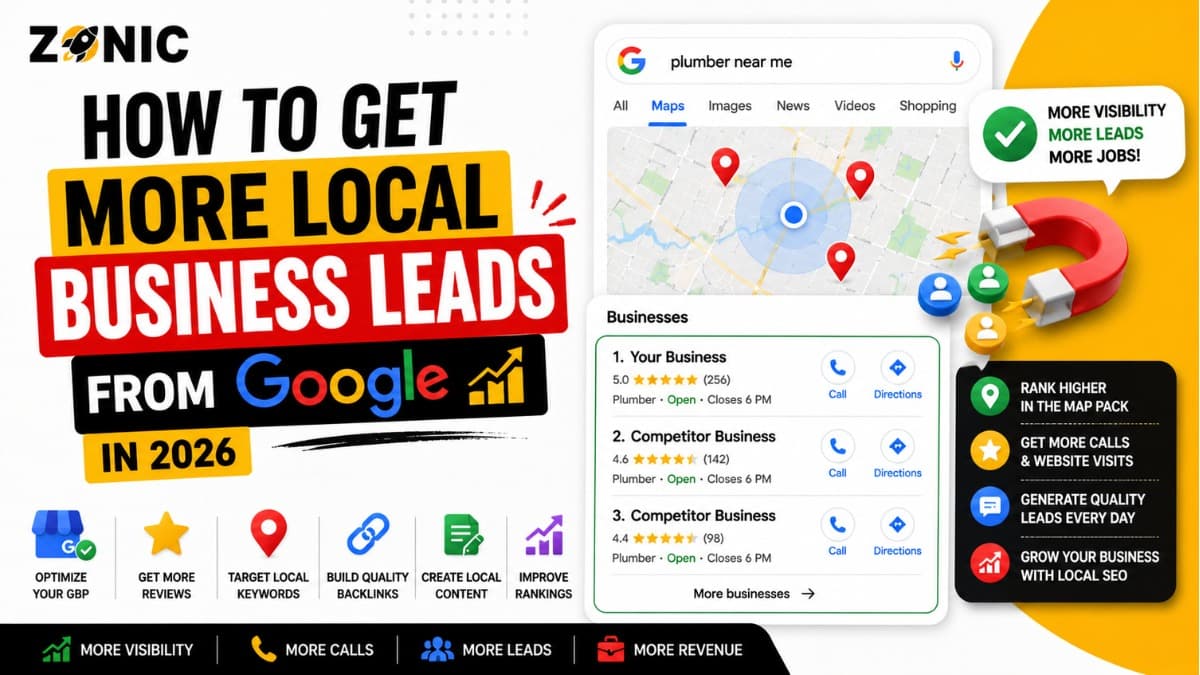
Google is still one of the strongest lead sources for local businesses in 2026. Whether someone needs a roofer, plumber, dentist, lawyer, HVAC contractor, remodeler, cleaning company, med spa, or emergency service, the search often starts on Google.
The customer may search from a phone while standing in their kitchen, sitting in a parking lot, or dealing with an urgent problem at work. They are not only browsing. Many of them are ready to call, book, request an estimate, ask for directions, or compare nearby companies.
That is why learning how to get more local business leads from Google matters.
Local lead generation is not only about ranking. Rankings are useful, but leads come from a full system. Your Google Business Profile needs to appear for the right searches. Your reviews need to create trust. Your website needs to explain your services clearly. Your phone number and forms need to be easy to use. Your business information needs to match across the web.
In local lead generation 2026, the businesses that win are not always the ones with the biggest budgets. They are the ones that look real, helpful, active, and trustworthy when customers are ready to choose.
This guide explains how local businesses can turn Google visibility into more calls, form submissions, booked appointments, and real sales opportunities.
Why Google Is Still a Major Local Lead Source in 2026
Google connects nearby customers with businesses at the exact moment they are searching for help. That makes it one of the highest intent channels for local service and appointment-based companies.
Customers Search When They Are Ready to Act
Local searches are often action-driven. Someone searching “emergency plumber near me” probably has a live problem. Someone searching “roof repair company in Brooklyn” may be comparing contractors for an inspection. Someone searching “family dentist near me” may be ready to book.
These searches are different from general research searches. They carry stronger buying intent.
If your business appears with strong reviews, clear services, good photos, and easy contact options, you have a better chance of getting the lead before a competitor does.
Google Shows Trust Signals Before the Website Click
Customers do not always visit your website first. They may see your Google Business Profile, reviews, photos, hours, phone number, services, and location details before they click anywhere.
That means your profile can win or lose the lead before the website gets involved.
A weak profile with few reviews, no photos, missing services, or unclear details can make customers skip you. A strong profile can make the customer call directly from Google.
Understand How Google Local Lead Generation Works
Google leads usually come from a mix of Maps visibility, organic search visibility, reviews, website content, and customer trust. Each part supports the next.
Google Business Profile Drives Map Leads
Your Google Business Profile is the main source of Google Maps visibility. It can appear in the local pack, Maps results, and branded searches.
A strong profile can generate calls, website clicks, direction requests, bookings, messages, and appointment actions.
For many local businesses, the profile is the first lead engine to improve because it is directly connected to local intent.
Your Website Supports Trust and Conversions
Your website helps customers understand your services in more detail. It also gives Google more context about what you do and where you work.
A customer may find you on Google Maps, then visit your website to check service pages, proof, pricing information, project photos, team details, or contact forms.
If the website is weak, slow, confusing, or generic, the lead can disappear.
Build a Complete Google Business Profile
A complete Google Business Profile gives customers and Google more information. Missing details can make your business look weaker than nearby competitors.
Use the Right Primary Category
Your primary category should describe the main thing your business does. This is one of the most important profile decisions.
A roofer should choose a roofing-related category. A dentist should choose the correct dental category. A law firm should choose the most accurate legal category. Do not choose a category only because a competitor uses it.
The category should match your real business.
Add Real Services
Services help customers understand what you offer. Add specific services that match your business.
For a contractor, that could include repair, replacement, inspection, installation, emergency service, maintenance, or specialty work. For a medical or wellness business, that could include consultations, treatments, exams, or procedures.
Do not list services you do not actually provide. Leads are only useful when they match what your business can handle.
Keep Hours, Phone, and Website Accurate
Customers may call directly from the profile. If your hours are wrong or your phone number does not work, you lose the lead.
Make sure your phone number, website link, hours, appointment link, address or service area, and business description are correct.
Small errors can cost real calls.
Improve Relevance for the Searches You Want
Relevance means Google understands your business and matches it to the right search. If your profile and website are vague, you may miss good leads.
Match Your Services to Customer Searches
Think about what customers actually type into Google. They may search by service, problem, location, urgency, or business type.
Examples include:
“roof leak repair near me”
“emergency dentist open now”
“AC repair in Queens”
“personal injury lawyer near me”
“kitchen remodel contractor”
Your profile and website should clearly support the services you want leads for.
Use Natural Service Language
Do not stuff keywords into every sentence. Use natural language that customers understand.
A good service page explains the problem, who needs the service, how your process works, what makes your business trustworthy, and how to contact you.
Google needs clarity. Customers need confidence.
Use Reviews to Turn Searchers Into Leads
Reviews are one of the biggest conversion drivers for local businesses. Customers often compare review count, rating, recency, and review wording before deciding who to call.
Ask Happy Customers Consistently
Build a review request process after a successful job, visit, appointment, or purchase. Ask customers to share their honest experience.
Do not offer rewards for reviews. Do not ask for fake reviews. Do not pressure customers to use exact wording.
A steady flow of real reviews is more trustworthy than a sudden spike that looks unnatural.
Respond to Reviews Like a Real Business
Review responses show customers that you care. They also keep your profile active.
Avoid using the same response every time. Write naturally. Thank the customer, mention the service when it fits, and keep the tone professional.
A thoughtful response can help future customers feel more comfortable contacting you.
Add Photos That Build Trust Fast
Photos can make a business feel real before a customer calls. They help people see your team, location, work, products, equipment, and results.
Use Real Business Photos
Use photos of your storefront, staff, vehicles, equipment, finished projects, treatment rooms, service work, products, office, or customer-facing areas.
Avoid relying on stock photos. Generic images do not build the same trust.
Real photos help customers feel like they know who they are contacting.
Update Photos Regularly
An active photo gallery can make the profile look more current. Add recent work, seasonal updates, team photos, and service-related images.
For service businesses, job photos can help prove experience. For storefront businesses, interior and exterior photos help customers recognize the location.
Build Service Pages That Convert Visitors
A local business website should not only exist. It should turn visitors into leads. Strong service pages help customers decide faster.
Give Every Core Service Its Own Page
Do not put every service into one short page. Important services deserve their own pages.
A roofer should have separate pages for repair, replacement, flat roofing, emergency repair, inspections, and gutters if those are core services. A med spa should explain each main treatment. A law firm should separate practice areas clearly.
Specific pages help Google understand relevance and help customers find answers.
Answer Customer Questions Before They Ask
A strong service page should answer common questions. What problem does the service solve? When should a customer call? What happens during the process? How soon can they get help? What makes your business trustworthy?
Customers who get clear answers are more likely to take action.
Create Local Pages for Real Service Areas
Location pages can help bring local leads when they are useful, specific, and written for real customers.
Avoid Thin City Name Swaps
A weak location page only changes the city name and repeats the same text everywhere. That does not help much.
A strong location page includes local context. Mention property types, customer needs, common issues, traffic patterns, service response, local regulations, weather, neighborhood concerns, or common service problems when relevant.
The page should feel like it was written for that location.
Connect Location Pages to Real Services
Location pages should not be empty Local SEO pages. They should connect the local area to your actual services.
For example, a roofing company page for a neighborhood can discuss common roof types, storm damage, flat roofs, gutters, and roof inspection needs in that area.
A law firm page can discuss local court access, case types, consultation process, and service coverage.
Improve Calls, Forms, and Booking Paths
Traffic does not become a lead unless the customer can contact you easily. Conversion setup matters just as much as ranking.
Make Phone Numbers Easy to Find
Your phone number should be visible on your website, especially on mobile. Customers should not need to scroll too far or open several pages to call.
For urgent services, click-to-call buttons are important.
The faster a customer can call, the better your chances of winning the lead.
Use Simple Contact Forms
A form should be easy to complete. Ask only for details you need at the first step.
Name, phone, service needed, location, and message are often enough. Long forms can reduce submissions.
You can collect more details after the customer reaches out.
Add Clear Calls to Action
Every important page should tell the visitor what to do next.
Use calls to action like “Call for a Free Estimate,” “Book an Appointment,” “Request a Consultation,” “Schedule Service,” or “Get Help Today.”
A clear CTA helps turn interest into action.
Keep Business Information Consistent Across the Web
Google and customers trust businesses more when information is consistent. Name, address, phone number, and website details should match across major platforms.
Clean Up Old Listings
Old phone numbers, old addresses, outdated business names, and duplicate listings can create confusion.
Check major directories, social profiles, industry sites, local listings, and past agency-created citations.
If customers find different information in different places, they may hesitate to call.
Use Accurate NAP Details
NAP means name, address, and phone number. These details should match your Google Business Profile and website.
For service-area businesses, be careful with address visibility. If customers do not visit your address, your profile and online presence should not make it look like a public storefront.
Track the Leads That Matter
To get more local business leads from Google, you need to know what is already working. Tracking helps you improve the right things.
Track Calls and Form Submissions
Track phone calls, website forms, booking requests, quote requests, and appointment requests.
Do not only track rankings. A page that brings real leads is more valuable than a page that gets empty traffic.
Lead tracking shows which services and locations produce business.
Measure Lead Quality
Not every lead is equal. Some calls become booked jobs. Some form submissions are spam. Some leads are outside your service area.
Track which leads turn into appointments, estimates, sales, or completed jobs.
This helps you improve marketing based on revenue, not just traffic.
Common Mistakes That Cost Local Businesses Leads
Many businesses lose Google leads because their profile, website, and contact process are not aligned. These mistakes are common but fixable.
Avoid these lead-killing problems:
Incomplete Google Business Profile
Wrong primary category
Weak or outdated reviews
No real business photos
Slow website on mobile
Phone number hard to find
Long contact forms
Thin service pages
Duplicate listings
Inconsistent business information
This is the first bullet section. Fixing these basics can often improve lead flow before spending more on ads.
A Practical Local Lead Generation Plan for 2026
A strong local lead generation plan should connect visibility, trust, and conversion. Google should not be treated as only a ranking channel.
Follow this plan:
Complete and clean up your Google Business Profile
Use accurate categories and real services
Add fresh photos and business updates
Ask happy customers for honest reviews
Respond to reviews naturally
Build strong service pages
Create useful local pages
Keep NAP details consistent
Make phone numbers and forms easy to use
Track calls, bookings, estimates, and sales
This is the second and final bullet section. The best results come when every part supports the same goal: more qualified local leads.
How Zonic Helps Businesses Get More Leads From Google
Zonic helps local businesses turn Google visibility into calls, form submissions, booked appointments, and better lead flow.
Google Business Profile Optimization
Zonic reviews your profile name, categories, services, photos, reviews, hours, website link, service areas, and profile health.
The goal is to improve visibility while keeping the profile accurate and safe.
Local SEO and Website Content
Zonic helps build service pages, location pages, and blog content that support real customer searches.
The content is written to help customers understand your services and take the next step.
Lead Tracking and Conversion Support
Zonic helps businesses focus on the numbers that matter: calls, forms, booked jobs, consultations, and sales opportunities.
More visibility is useful, but better leads are the real goal.
Conclusion
Getting more local business leads from Google in 2026 takes more than ranking for one keyword. You need a complete Google Business Profile, strong reviews, real photos, useful website pages, accurate business information, simple contact paths, and proper lead tracking.
Google rewards businesses that are relevant, nearby, and prominent. Customers reward businesses that look trustworthy, helpful, and easy to contact.
Start by cleaning up your profile. Then improve your services, reviews, photos, website, location content, and conversion paths. Track what leads to calls, bookings, estimates, and sales.
If you want to get more local business leads from Google, Zonic can help build a stronger local SEO and lead generation system for 2026.
Call Zonic Media today at (302) 726-9736 or visit us at 8 The Green, STE B Dover, Kent, DE 19901 United States for local lead generation and Google Business Profile support across the USA and NYC.