Your business is already listed on Google Maps. Customers can see your services, read reviews, check your hours, and call directly from your Google Business Profile. But what happens when your competitors appear ahead of you and receive most of the inquiries?
This is a common challenge for local businesses.
A plumbing company may appear near its office but struggle to attract calls from surrounding neighborhoods. A roofing contractor may have excellent reviews yet receive limited visibility for emergency repair searches. A dental practice may rank for its business name but compete against established clinics for searches such as "dentist near me."
Having a Google Business Profile does not guarantee that customers will find you whenever they need your services.
That's where Google Ads can help.
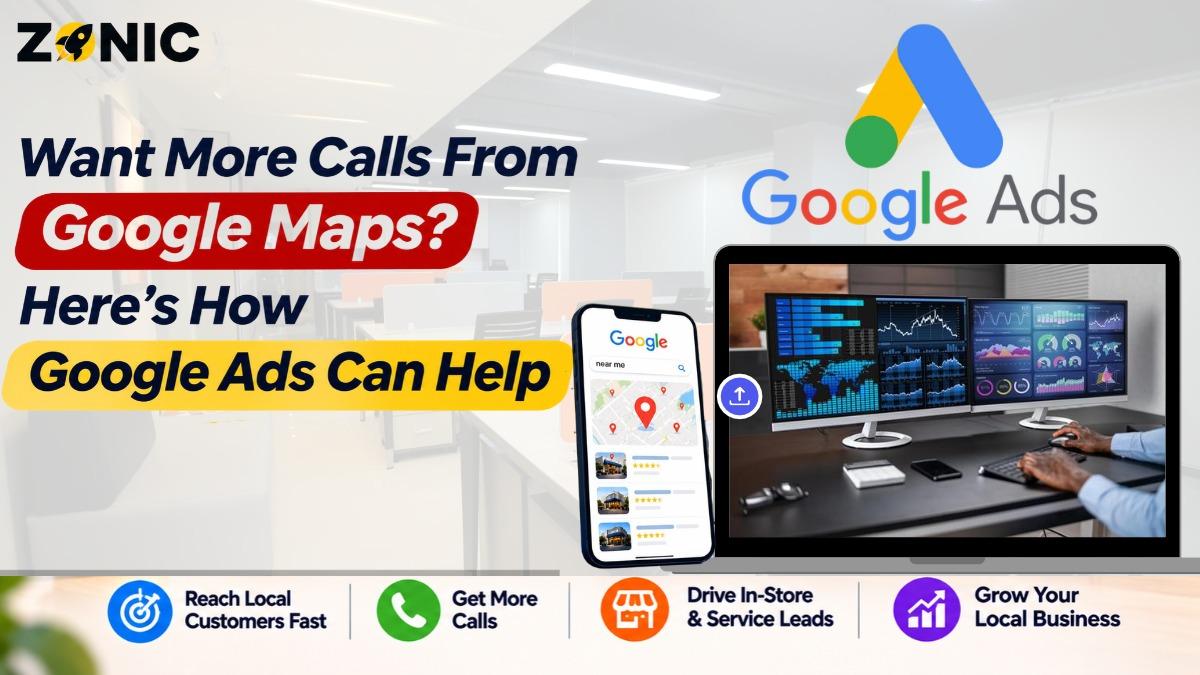
Google Ads offers paid advertising opportunities across Google Search and Maps. With the right campaign setup, businesses can reach people searching for relevant services, encourage direct phone calls, and generate additional leads beyond their organic visibility.
However, running advertisements does not automatically improve your unpaid Google Maps rankings. Paid advertising and organic Google Business Profile visibility operate through different systems.
The advantage comes from understanding how to use both.
This guide explains how Google Ads for Google Maps calls works, which advertising features support phone inquiries, how to target the right customers, and how local businesses can turn advertising budgets into qualified calls.
Why Google Maps Calls Matter for Local Businesses
Google Maps is often one of the first places customers look when they need a nearby product or service.
Someone dealing with a leaking pipe may search for an emergency plumber. A driver with a broken-down vehicle may need towing assistance. A homeowner might look for a roofing contractor after discovering water damage.
These customers may already be close to making a decision.
They often compare businesses based on location, ratings, availability, and contact information before choosing whom to call.
Local Searches Often Have Strong Buying Intent
Many local searches happen when a person needs a solution rather than general information.
For example, someone researching how water heaters work may not need a plumber immediately. Someone searching for water heater repair in their neighborhood is more likely to need professional assistance.
That difference matters.
A company appearing for commercially relevant local searches has an opportunity to connect with people who are ready to request service.
For businesses where customers prefer speaking directly with a representative, telephone calls can be especially valuable.
Organic Visibility Does Not Cover Every Search
Google determines local rankings using relevance, distance, and prominence.
A business may be relevant to a search but rank below closer competitors. Another company may have stronger reviews, broader online recognition, or a more established local presence.
Consequently, a well-maintained Google Business Profile may still have limited visibility in certain parts of a service area.
Google Ads provides another way to reach potential customers without depending entirely on organic map pack positions.
How Google Ads Can Generate More Google Maps Calls
Google Ads allows businesses to advertise for relevant searches and locations.
Eligible campaigns can appear in Google Search and Maps through formats such as local search ads and promoted map placements.
Depending on the advertising format, prospective customers may see business information, a website link, location details, or an option to contact the advertiser.
This creates additional opportunities for phone inquiries.
Paid Advertising Extends Your Search Visibility
Consider a roofing company serving several neighborhoods.
Its Google Business Profile may appear prominently near its office but receive less visibility farther away.
A geographically targeted Google Ads campaign can help the company compete for relevant searches from customers in other eligible areas it genuinely serves.
The advertisement may introduce the business to people who would not otherwise see its organic listing near the top.
This additional exposure can generate calls when the advertisement matches the customer's immediate needs.
Google Maps Ads Are Different From Organic Results
Google Maps can contain both paid and unpaid business placements.
Paid advertising is identified through Google's advertising presentation, while unpaid results are selected through the local ranking system.
Purchasing advertisements does not guarantee a higher organic ranking.
Google explicitly states that businesses cannot pay for better unpaid local rankings.
Therefore, businesses should evaluate Google Ads calls separately from organic Google Business Profile interactions.
The goal is additional qualified inquiries, not purchasing a better map pack position.
Connect Google Business Profile With Google Ads
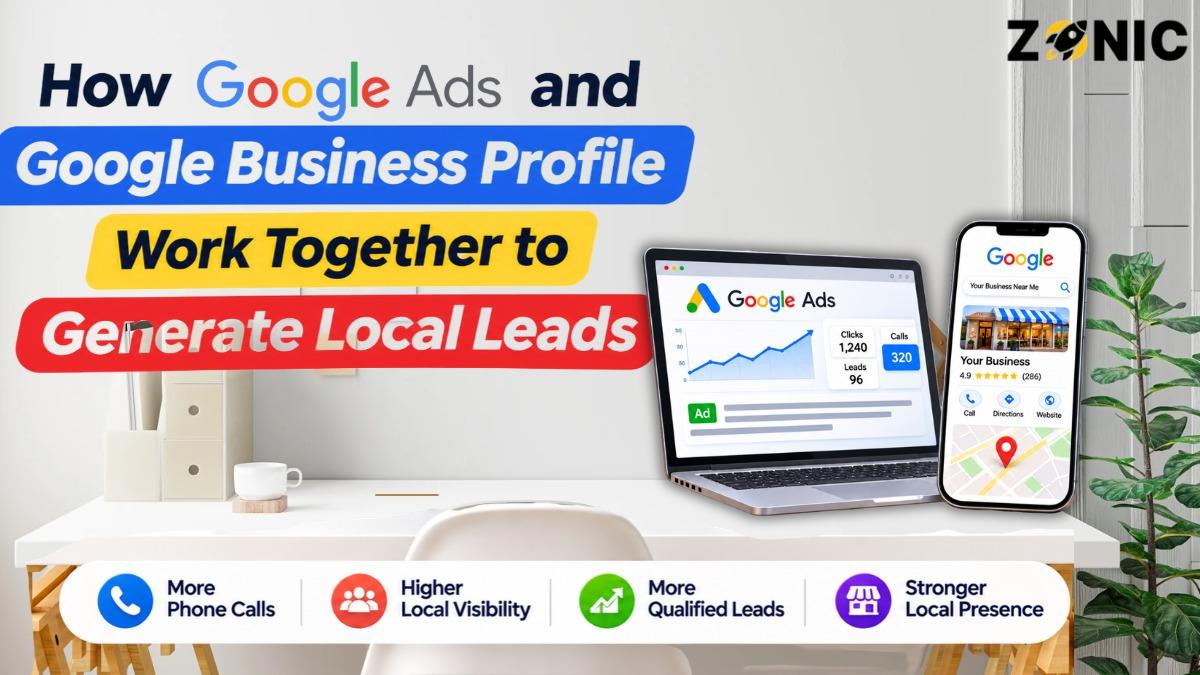
One of the most useful ways to combine Google Ads and Google Business Profile is through location assets.
Location assets allow eligible advertisers to display relevant business location information alongside advertisements.
Google uses information from connected Business Profiles or other eligible location sources to support these features.
Why Location Assets Matter
Location assets can help people recognize the business and understand its location.
Depending on the advertisement and device, customers may be able to call, visit the website, or request directions.
Google's documentation specifically recommends location assets for businesses seeking calls through local search ads.
For eligible Google Maps advertising formats, active approved location assets are an important requirement.
Businesses should ensure their profiles contain accurate details before connecting them to advertising.
Link the Correct Business Profile
A company should use its legitimate, existing Google Business Profile rather than create a new listing solely for advertising.
The profile should reflect the actual business name, address or service-area arrangement, contact information, and operating hours.
For multi-location companies, the appropriate locations should be selected for relevant campaigns.
Businesses should also retain ownership of their profiles and give advertising agencies suitable management permissions.
This protects the company's account access and reduces unnecessary complications.
Use Call Assets to Encourage Direct Phone Calls
Google Ads also provides call assets, which allow eligible advertisements to display a phone number or calling option.
For mobile users, a call button can make contacting the business more convenient.
This is especially useful for businesses where a conversation is more valuable than a website visit.
Call Assets Reduce Unnecessary Steps
A customer searching for emergency plumbing may not want to read several pages before requesting assistance.
A relevant advertisement with a calling option allows that customer to contact the company more directly.
The same approach can support towing services, HVAC repairs, locksmith services, property restoration, and other time-sensitive businesses.
However, direct calling should be used when the business is prepared to answer inquiries.
A call-focused campaign is only effective when the customer can reach someone capable of providing assistance.
Schedule Calls Around Actual Business Hours
Google Ads allows advertisers to schedule eligible call assets for periods when the business accepts calls.
A company operating during regular business hours should generally avoid paying to encourage calls when nobody is available.
A genuine 24-hour emergency service may have different scheduling requirements.
The important point is that advertising availability should match real operational capacity.
A missed call can mean lost advertising spend and a customer choosing another provider.
Target Customers in the Right Geographic Areas
Geographic targeting is one of the most valuable features of Google Ads for local businesses.
Advertisers can select appropriate cities, regions, or other eligible geographic targets and adjust targeting settings according to business goals.
However, broad geographic coverage does not necessarily produce better results.
Target Areas Your Business Can Actually Serve
A plumbing company based in one city may cover several surrounding communities.
That does not mean every nearby market is equally profitable.
Longer travel distances may increase operating costs or make emergency response impractical.
Advertising should concentrate on locations where the company can provide reliable service and where customer demand justifies the investment.
A tightly targeted campaign may produce fewer clicks but better-quality inquiries.
Review Google's Location Targeting Settings
Google Ads can consider whether people are physically present in a target area or have demonstrated interest in that location, depending on the campaign settings.
This distinction is important.
A towing business looking for stranded drivers may prioritize searches associated with people physically in its operating territory.
A hotel or travel-related business may want to reach prospective customers planning visits from elsewhere.
The targeting approach should reflect the service and customer journey.
Choose Keywords That Generate Phone Calls
Not every Google search has the same commercial value.
A business should distinguish between informational searches and inquiries from customers actively looking for assistance.
For example, "how to fix a leaking pipe" may attract someone researching a do-it-yourself solution.
"Emergency plumber near me" suggests a stronger possibility that the person needs immediate service.
Focus on High-Intent Service Keywords
A local business can prioritize searches connected to the services most likely to generate qualified calls.
A roofing contractor might advertise roof leak repair, roof replacement estimates, or storm damage inspections.
A towing company could focus on emergency towing, flatbed towing, and roadside assistance.
A dental practice may advertise relevant appointment-based services while following applicable healthcare advertising requirements.
Keywords should reflect services the business actually provides.
Use Negative Keywords to Reduce Wasted Spend
Negative keywords help prevent ads from appearing for searches that are unlikely to produce suitable customers.
For example, a business that does not offer free towing may want to exclude irrelevant searches involving free services.
A company providing residential plumbing may need to exclude unrelated equipment, training, or employment searches.
Search term reports can reveal which queries trigger advertisements.
Reviewing this information regularly helps businesses refine targeting and reduce unnecessary spending.
Build Landing Pages That Turn Clicks Into Calls
Not every customer will call directly from an advertisement.
Some will visit the website first to confirm the company's credibility, available services, reviews, and contact details.
A strong landing page should support that decision.
Match the Page to the Advertisement
If the advertisement promotes emergency roof repair, the visitor should reach a relevant emergency roofing page.
If the advertisement promotes drain cleaning, the landing page should explain drain cleaning services.
Sending every paid visitor to a generic homepage may create unnecessary friction.
The page should clearly communicate what the business offers, where it operates, and how prospective customers can request assistance.
Prioritize Mobile Call Buttons
Customers using smartphones should be able to call without searching through the website.
Place a clear, functional tap-to-call option prominently on important landing pages.
Additional information can include relevant reviews, service descriptions, photographs, hours, and coverage details.
These elements help customers evaluate the business before contacting it.
The goal is to make the decision straightforward without creating misleading urgency or unsupported claims.
How Much Should You Spend on Google Ads for More Calls?
There is no universal budget that guarantees a certain number of phone calls.
Advertising costs depend on competition, industry, geographic targeting, keywords, and campaign performance.
A better approach begins with the business's target cost per qualified call.
Calculate Your Advertising Budget
Suppose a local business wants 20 qualified calls per month and expects to spend $75 per qualified call.
Its illustrative monthly advertising budget would be:
20 qualified calls × $75 = $1,500.
This is an estimate, not a guaranteed outcome.
The business should also consider how many calls become paying customers.
If 20 qualified conversations produce five customers, the advertising cost per acquired customer would be $300 before management fees and other expenses.
Comparing that cost with customer value helps determine whether advertising is sustainable.
Start With a Focused Campaign
A small business does not necessarily need to advertise every service immediately.
It may be more effective to begin with a limited group of commercially valuable services and locations.
After collecting reliable conversion data, the company can evaluate which searches generate qualified inquiries.
Campaign expansion should follow actual results rather than assumptions.
Track Calls From Google Ads and Google Business Profile Separately
Tracking is essential because a click on a calling option is not always the same as a completed conversation.
Google Business Profile performance reporting can show interactions with the profile's call button.
Google Ads offers additional call reporting features for eligible campaigns.
These tools measure different interactions and should not automatically be combined as though they represent unique customers.
Use Google Ads Call Reporting
Google Ads call reporting can provide information about calls generated through eligible advertising features.
Depending on settings and eligibility, reporting may include call duration, timing, connection status, and other information.
Advertisers can also define phone call conversions using a minimum duration or other supported methods.
This helps distinguish brief interactions from potentially valuable conversations.
However, call duration alone does not prove that someone became a customer.
Track Qualified Leads and Booked Jobs
A business should review which calls become appointments, estimates, service requests, or completed sales.
For example, 30 call interactions may produce 18 connected conversations, 12 qualified inquiries, and seven booked jobs.
Those distinctions help determine the real value of advertising.
Some calls may concern services the business does not offer. Others may come from outside the operating area.
Marketing decisions should be based on qualified business opportunities rather than raw call counts.
Common Mistakes That Reduce Google Maps Call Performance
Several mistakes can prevent businesses from generating profitable calls even when advertisements receive clicks.
A common problem is using inaccurate telephone numbers or operating hours.
Another is advertising across areas the company cannot realistically serve.
Broad keywords can also attract irrelevant traffic, while weak landing pages can cause visitors to leave before contacting the business.
Some companies focus on generating calls but fail to answer them consistently.
Others assume that purchasing Google Ads will automatically improve organic Google Maps rankings.
These problems can be reduced through accurate business information, focused targeting, reliable call handling, and regular conversion analysis.
How Zonic Helps Businesses Get More Calls From Google Maps
Zonic helps local businesses connect Google Maps visibility with paid search advertising and qualified lead generation.
The process begins with reviewing the company's Google Business Profile, website, services, geographic coverage, competitors, and current lead performance.
Zonic evaluates whether the business would benefit from additional paid visibility and which services are most suitable for advertising.
For businesses using Google Ads, the focus includes campaign structure, location assets, call assets, search terms, negative keywords, landing pages, and conversion tracking.
The strategy is adjusted to the business model.
A towing company needs a different approach from a dental practice. A plumbing contractor may prioritize emergency inquiries, while a professional services firm may focus on qualified consultations.
Zonic's objective is to help businesses attract useful customer calls while reducing unnecessary advertising spending.
Conclusion
Google Ads can help local businesses generate more calls by creating additional paid visibility across relevant search experiences, including eligible Google Maps placements.
However, paid advertising does not directly improve organic Google Business Profile rankings.
The strongest approach combines an accurate Google Business Profile with relevant advertising, effective location targeting, convenient calling options, and reliable conversion tracking.
A business should also make sure its team can answer incoming calls and respond appropriately to customer needs.
More exposure is only valuable when it leads to qualified inquiries and real business opportunities.
Zonic helps local businesses improve Google Business Profile visibility, plan call-focused Google Ads campaigns, and measure lead quality.
If your business wants more qualified calls from Google Maps, contact Zonic Media at (302) 726-9736 or visit 8 The Green, Suite B, Dover, DE 19901 to discuss local advertising and SEO opportunities in New York City and across the United States.
Frequently Asked Questions
Can Google Ads help my business get more calls from Google Maps?
Yes. Eligible Google Ads campaigns can appear in Google Maps and other search placements. Location assets and call-focused advertising features can create additional opportunities for customers to contact your business.
Does running Google Ads improve organic Google Maps rankings?
No. Google Ads does not directly improve unpaid Google Business Profile rankings. Google evaluates organic local results mainly through relevance, distance, and prominence.
What are location assets in Google Ads?
Location assets allow eligible advertisements to display information associated with business locations. They can use information from linked Google Business Profiles and support certain Google Maps advertising formats.
What are call assets in Google Ads?
Call assets let advertisers add calling options to eligible advertisements. Customers may be able to tap or click a call button, making it easier to contact the business without navigating through several pages.
How much should a local business spend on Google Ads?
The right budget depends on competition, service value, expected cost per qualified lead, and conversion performance. Businesses should begin with a realistic lead goal and evaluate results before increasing spending.