Delaware may be geographically small, but that does not make it one single marketing market.
A business competing in Wilmington can face a very different customer base from one operating in Dover, Milford, Lewes, or Rehoboth Beach. Local competition, travel patterns, customer intent, seasonality, and service areas can all change depending on where the business operates.
A professional services company in northern Delaware may depend on steady year-round inquiries. A contractor based near Dover may serve customers across several central Delaware communities. A restaurant or property service business near the beaches may experience significant shifts between peak visitor periods and quieter months.
Using exactly the same digital marketing strategy across those situations can waste budget.
Digital marketing for Delaware small businesses works best when it starts with three questions:
Where are the customers?
What are they searching for?
What action should they take next?
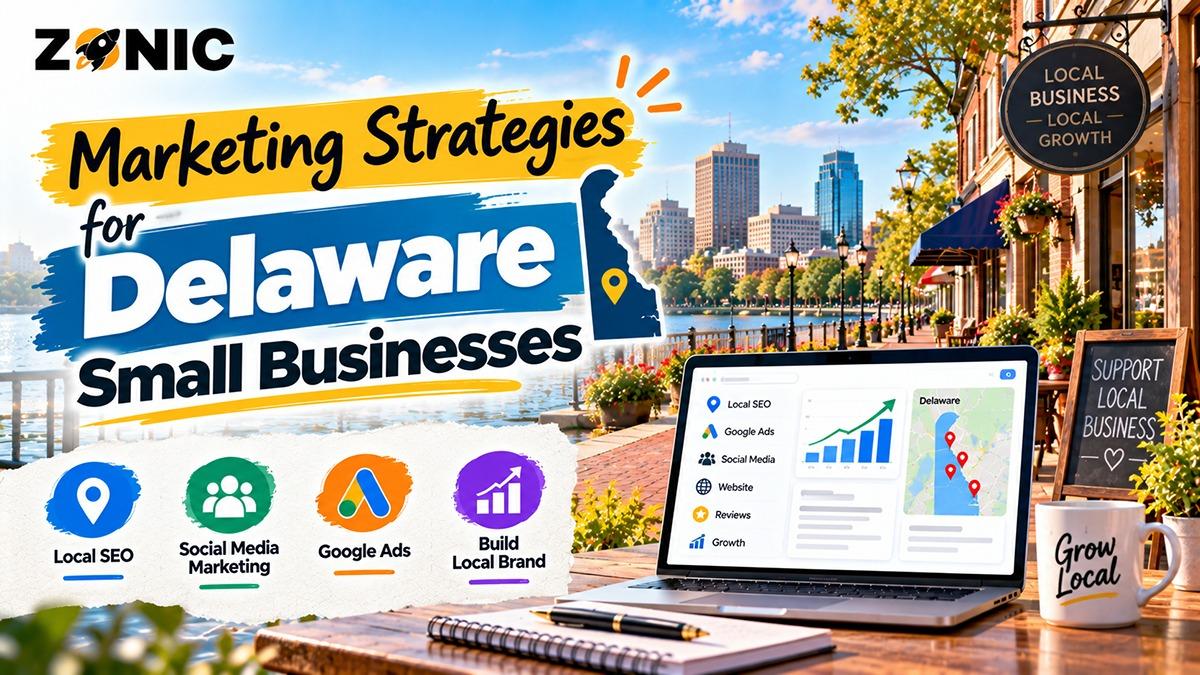
The answer may involve local SEO, Google Business Profile, paid search advertising, useful website pages, reviews, email, or seasonal campaign planning.
A marketing agency Delaware businesses work with should connect those channels to actual demand rather than recommending the same package to every company.
This guide explains how small businesses can approach marketing across New Castle, Kent, and Sussex counties, improve local visibility, use Google Ads more carefully, strengthen websites, and measure qualified customer activity.
Understanding Delaware's Three Distinct Business Markets
Delaware's size can make statewide marketing look simple.
In practice, customer concentration, competition, travel behavior, and seasonal demand differ across the state.
A business should understand those differences before deciding where to invest in SEO, paid search, content, or local visibility.
New Castle County: Wilmington and Northern Delaware
New Castle County includes Wilmington, Newark, New Castle, Middletown, and other communities within Delaware's most densely populated northern market.
Businesses here can compete against a relatively high concentration of nearby alternatives.
Professional services, healthcare practices, contractors, restaurants, retailers, and B2B companies may need to distinguish themselves within compact service areas.
A Wilmington law firm may need detailed practice-area pages and trustworthy attorney information.
A roofing company may benefit from strong service pages, genuine local coverage information, and Google Maps visibility.
A restaurant may depend heavily on accurate hours, menus, reviews, photographs, and easy directions.
Businesses near Delaware's borders may also serve customers in Pennsylvania, New Jersey, or Maryland.
That cross-border opportunity should be based on genuine operations and customer demand rather than assuming every nearby city deserves equal marketing investment.
Kent County: Dover and Central Delaware
Dover and surrounding Kent County communities create a different marketing environment.
Businesses may serve customers in Dover, Camden, Smyrna, Harrington, and other nearby areas while operating from one central location.
A contractor based in Dover may receive inquiries from several surrounding communities.
A dental practice may depend more heavily on local convenience, appointment availability, insurance information, and professional credentials.
A retailer may need strong Maps visibility, accurate store information, and product-focused website content.
For central Delaware businesses, local marketing should clearly communicate both the services offered and the areas genuinely served.
That is usually more useful than trying to appear equally across every part of the state.
Sussex County: Coastal Communities and Year-Round Residents
Sussex County includes Georgetown, Lewes, Rehoboth Beach, Dewey Beach, Bethany Beach, and many inland and coastal communities.
The customer mix can vary significantly by business.
Some companies primarily serve year-round residents.
Others may depend partly on tourism, second-home owners, vacation rentals, or seasonal visitor demand.
Restaurants, hospitality businesses, retailers, cleaning companies, property maintenance providers, and contractors may therefore experience meaningful seasonal changes.
A Rehoboth Beach restaurant might need to attract visitors during busier periods while still maintaining visibility among local residents outside peak season.
A contractor may see different demand from permanent homeowners, rental-property owners, and seasonal property managers.
The marketing plan should reflect the customers who actually produce revenue at different times of year.
Local SEO Helps Delaware Businesses Reach Nearby Customers
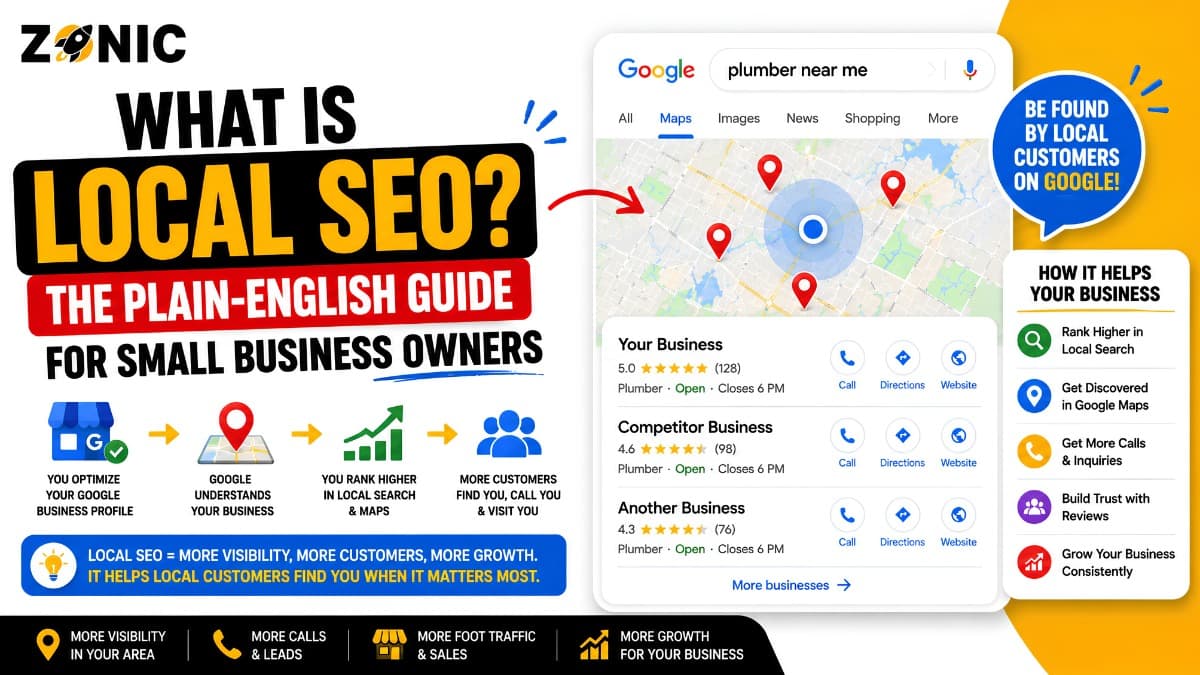
Local SEO improves how businesses appear when people search for products and services within a geographic area.
For Delaware businesses, relevant searches might include:
“roof repair Wilmington”
“dentist Dover”
“restaurant Rehoboth Beach”
or simply:
“plumber near me”
Google says local results are mainly based on relevance, distance, and prominence. Businesses can improve the factors within their control by maintaining accurate information, building useful websites, earning genuine reviews, and developing a credible local presence.
Optimize Google Business Profile for Actual Business Operations
Google Business Profile should represent how the business really operates.
A storefront should use an accurate customer-facing location.
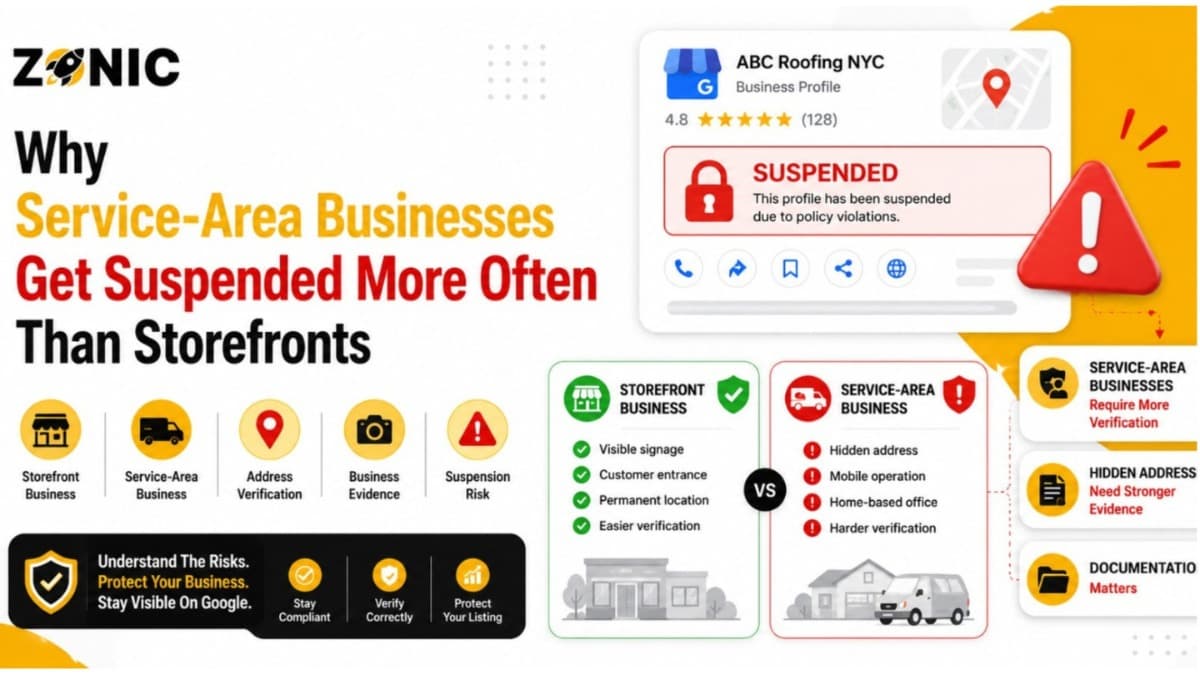
A service-area business that travels to customers and does not receive them at its business address should use the appropriate hidden-address setup.
The primary category should accurately describe the business rather than act as a list of keywords.
Hours, phone numbers, website links, and services should remain current.
Real photographs can help customers understand the business, but they should be used primarily to improve clarity and confidence rather than treated as a guaranteed ranking tactic.
The goal is an accurate profile that matches the website and the real customer experience.
Use Delaware Location Pages Without Repeating Content
Location pages can be useful when a business genuinely serves multiple communities.
The problem begins when the same page is duplicated for Wilmington, Newark, Dover, Georgetown, and other locations with only the city name changed.
A useful page should have a reason to exist.
A roofing company serving coastal Sussex County may discuss service considerations relevant to coastal properties and seasonal weather exposure.
A contractor working with older properties in Wilmington may encounter a different mix of housing styles, access challenges, and repair needs.
A local page should reflect actual customer questions and service conditions rather than merely repeat geographic keywords.
Google Ads Can Capture Customers Ready to Buy
SEO generally develops over time.
Google Ads allows businesses to compete for paid search visibility without first waiting for an organic ranking to develop.
That can be useful when launching a new service, entering a new market, promoting time-sensitive offers, or trying to generate demand while organic visibility is still developing.
Paid advertising still needs careful targeting and measurement.
Target Delaware Locations Carefully
A business serving central Delaware does not automatically need to advertise across the entire state.
Google Ads allows advertisers to target specific geographic areas and choose advanced location settings.
By default, many campaigns can reach people who are in or regularly in a target location or who have demonstrated interest in that location. Advertisers can also choose a presence-focused setting when they want to concentrate on people physically in or regularly in the target area.
That distinction matters.
A Dover emergency service company may care primarily about people currently within its operating territory.
A hotel, restaurant, or vacation-related business in coastal Delaware may also want to reach people outside the state who are actively researching a future Delaware trip.
Google also notes that geographic targeting relies on multiple signals and is not perfectly precise, so campaign performance should be reviewed rather than assuming every click comes from the exact intended location.
Match Advertising to Customer Intent
Paid search works best when the ad, search intent, landing page, and business offer agree with one another.
A home service company may advertise emergency repairs.
A dental office may promote appointment availability for services it genuinely provides.
A restaurant may target dining searches connected to actual hours and menu offerings.
A professional services company may focus on consultation-related searches.
The landing page should continue the same message.
Someone clicking an ad for one service should not arrive on a generic homepage and be expected to search for the relevant information.
The goal is qualified customer action, not simply more paid clicks.
Build a Website That Turns Visitors Into Customers
A useful website supports almost every other digital marketing channel.
Even someone who discovers a business through Google Maps may visit the website before calling, booking, or buying.
A confusing site can lose that opportunity.
Small-business websites should communicate:
what the business does,
where it operates,
why customers should trust it,
and what the visitor should do next.
Prioritize Mobile Experience
Customers frequently research Delaware businesses from smartphones.
A service business should make the phone number easy to tap.
A restaurant should make menus, hours, and directions easy to find.
A healthcare practice should provide clear appointment instructions.
Large images, intrusive popups, complicated menus, and slow-loading pages can interrupt the customer journey.
The mobile experience should make the desired action easier, not harder.
Build Pages Around Services and Customer Questions
Important services deserve enough information to help a customer understand what is being offered.
A home improvement company might need separate pages for roofing, siding, windows, and gutters.
A professional services firm may need individual pages for different service categories.
Educational content can answer common questions about costs, timelines, maintenance, comparisons, or preparation.
The website should help customers make decisions instead of repeating generic promotional language.
Reviews and Reputation Matter Across Delaware
Reviews influence how people compare unfamiliar businesses.
Potential customers may examine ratings, recent experiences, business responses, and whether the feedback appears genuine.
Google also says more reviews and positive ratings can help local ranking.
Reviews therefore support both customer confidence and local visibility.
Make Review Requests Part of Regular Operations
Businesses can ask customers for genuine feedback after a completed service or purchase.
Google provides review links and QR codes specifically for this purpose.
Requests should remain voluntary.
Do not offer discounts, gifts, or other incentives in exchange for reviews.
Do not pressure customers to change or remove negative reviews.
Do not manufacture feedback from staff, friends, or other people without genuine experiences.
Google treats incentivized and fake engagement seriously and may restrict Business Profiles that violate those policies.
A steady flow of authentic feedback is more useful than artificial rating growth.
Respond Professionally to Feedback
Review responses show future customers how the business communicates.
Thank people who leave positive feedback.
Respond calmly to complaints.
Avoid public arguments or unnecessary disclosure of customer information.
Healthcare, legal, financial, and other regulated industries may have additional privacy or professional obligations that affect what can be discussed publicly.
A response should strengthen trust rather than create a second problem.
Plan Marketing Around Delaware's Seasonal Demand
Seasonality affects Delaware businesses differently depending on industry and location.
Coastal hospitality and tourism-related companies may see stronger visitor demand during warmer periods.
Home service companies may experience seasonal patterns tied to weather, maintenance, or property preparation.
The business should use its own historical sales and lead data rather than assume every Delaware company follows the same seasonal calendar.
Prepare Coastal Campaigns Before Peak Demand
Businesses serving Delaware's coastal communities should prepare before the period when customers begin actively searching and booking.
Restaurants can update menus, photographs, hours, and reservation information.
Vacation-oriented businesses can improve availability and booking information.
Property-service companies can promote legitimate seasonal work based on actual customer demand.
Delaware's Tourism Office reported 29.3 million total visitors in 2023, including day, overnight, business, and leisure travelers. That figure is statewide and should not be interpreted as the number of visitors to any single beach community.
The useful marketing question is not simply whether Delaware receives tourists.
It is when a particular business's customers begin researching, booking, or visiting.
Keep Marketing Active Beyond Summer
Coastal businesses should not assume customer demand disappears after the peak visitor season.
Year-round residents, property owners, businesses, and off-season visitors still create opportunities.
Restaurants may promote year-round dining.
Contractors may focus on maintenance and repair.
Cleaning and property management businesses may serve vacation homes and permanent residents throughout the year.
Budgets and messaging should change with actual demand instead of switching visibility off completely after summer.
Choose Marketing Channels Based on Business Goals
Not every Delaware business needs equal investment across SEO, paid search, social media, email, and reputation management.
The right mix depends on customer behavior, budget, competition, and the timeline for results.
Marketing Channel | Main Purpose | Best Application |
Local SEO | Improve nearby search visibility | Businesses relying on local customers |
Google Ads | Capture paid search demand | High-intent services and time-sensitive campaigns |
Website SEO | Develop organic visibility | Service companies and professional firms |
Social media | Support awareness and engagement | Restaurants, retail, hospitality, and community brands |
Email marketing | Communicate with existing audiences | Businesses with permission-based customer lists |
Reputation management | Build customer trust | Businesses prospects compare before purchasing |
A Delaware business with limited resources should prioritize channels closest to actual customer acquisition.
A contractor may benefit more from strong service pages, Maps visibility, and paid search than from daily posting across several social platforms.
A restaurant may find social content, local search, reviews, and email all useful for different reasons.
The channel should fit the customer journey.
Track Marketing Performance Across Delaware Locations
Marketing should ultimately be measured through business outcomes.
A campaign may generate high traffic from Wilmington but few qualified inquiries.
Another may produce fewer website visits from Dover but more booked appointments.
Those differences matter when allocating future budget.
Measure Leads and Revenue by Market
Businesses serving several Delaware areas should review where qualified inquiries actually come from.
Useful metrics may include:
Qualified phone calls
Appointment requests
Completed forms
Booked services
Purchases
Customer acquisition cost
Revenue where attribution is practical
Google Ads can report performance by geography, but Google notes that location targeting is based on multiple signals and is not perfectly precise.
Website analytics can also show which location and service pages attract visitors.
Combining platform data with actual CRM, booking, or sales records usually provides a more useful view than relying on ad-platform metrics alone.
Avoid Spending Equally Across Every County
Equal allocation may appear simple but rarely reflects actual business opportunity.
A company generating most of its profitable work in New Castle County may not need the same spend in Sussex County.
A hospitality company dependent on coastal visitors may have the opposite pattern.
Investment should follow measurable opportunity and operational capacity.
Start where the business can actually serve customers well, then expand when results justify it.
How to Choose a Delaware Digital Marketing Agency
Hiring a digital marketing agency Delaware business owners can rely on should begin with strategy rather than package names.
The provider should explain how its recommendations fit the business's:
services,
locations,
customers,
competition,
growth goals.
A generic statewide marketing plan may miss meaningful differences between Wilmington, Dover, and Sussex County.
Ask About Local Market Experience
A capable agency should understand how local SEO, Google Business Profile, geographic advertising, website content, reviews, and conversion tracking work together.
Ask how it will research the specific markets the business serves.
Ask how it handles location pages, advertising geography, business information, lead tracking, and seasonal demand.
Local knowledge does not mean the agency must physically sit in every Delaware town.
It means the agency should understand how to research and respond to genuine differences between those markets.
Compare Deliverables and Reporting
Before signing, confirm exactly what the agency will provide.
That may include:
SEO audits,
website updates,
content writing,
Google Business Profile management,
Google Ads,
conversion tracking,
or reporting.
Also clarify what costs extra.
The business should control its website and domain, retain appropriate administrator access to advertising and analytics accounts, and retain owner access to its Google Business Profile.
The agency can manage those systems without becoming the only party with control.
A trustworthy partner should make its work understandable and keep the business informed.
How Zonic Helps Delaware Small Businesses Grow Online
Zonic helps Delaware businesses build digital marketing strategies around their actual market, competition, and customer-acquisition goals.
The process begins with reviewing the website, Google Business Profile, service areas, organic visibility, competitors, advertising opportunities, and conversion paths.
For a Wilmington-area business, the priority may be stronger service pages, competitive local search visibility, or more focused Google Ads.
A Dover business may need clearer service-area information, better location content, or improved conversion tracking.
A Sussex County business may require seasonal campaign planning that accounts for both local residents and visitor-driven demand.
The approach should change with the business.
Zonic combines SEO, Google Ads, website improvements, and local marketing strategy according to the opportunity rather than forcing one identical plan onto every Delaware company.
The goal is qualified inquiries and sustainable business growth rather than visibility for its own sake.
Conclusion
Digital marketing for Delaware small businesses works best when geography and customer behavior are treated as real business factors.
New Castle, Kent, and Sussex counties do not create identical marketing conditions.
A strategy appropriate for a Wilmington professional firm may not fit a Dover contractor or a Rehoboth Beach restaurant.
Local SEO can improve discovery among nearby customers.
Google Ads can capture current paid search demand.
A useful website can help convert interest into action.
Genuine reviews strengthen trust.
Seasonal planning can help coastal businesses adjust campaigns as demand changes.
The strongest strategy combines the channels that fit the business rather than trying to use every platform equally.
Zonic Media provides digital marketing and SEO services for Delaware businesses, helping companies improve local visibility, website performance, advertising efficiency, and qualified lead generation. Request a free audit through Zonic's Delaware SEO Company page, or call (302) 726-9736, to discuss your marketing goals with Zonic at 8 The Green, Suite B, Dover, DE 19901,.
Frequently Asked Questions
What is the best digital marketing strategy for a small business in Delaware?
There is no single best strategy for every business. The right approach depends on location, customer intent, competition, budget, and growth goals. Many local businesses benefit from combining a strong website, Google Business Profile, local SEO, genuine reviews, and carefully targeted advertising.
How does marketing differ between Wilmington, Dover, and Delaware beach towns?
Wilmington and northern Delaware can involve more concentrated competition in professional services, healthcare, home services, and other categories. Dover businesses may draw from the city and surrounding central Delaware communities. Coastal businesses may need to balance year-round residents with tourism, second-home owners, and seasonal demand.
Is local SEO important for Delaware businesses?
Yes, for businesses that depend on nearby customers. Google mainly evaluates local results through relevance, distance, and prominence. Accurate business information, suitable categories, genuine reviews, useful website content, and a credible local presence can support visibility, although proximity and competition still matter.
Should a Delaware small business invest in SEO or Google Ads first?
The answer depends on urgency, budget, existing visibility, and customer value. A business needing faster paid exposure may prioritize Google Ads while building an SEO foundation. An established company with useful existing pages may find stronger opportunity in improving organic visibility first.
How can Delaware beach businesses plan seasonal marketing?
Review historical booking, sales, and inquiry patterns. Prepare campaigns before demand peaks, keep hours and booking information current, and adjust spending according to real customer activity. Coastal businesses should also account for year-round residents and property owners rather than marketing only to summer visitors.