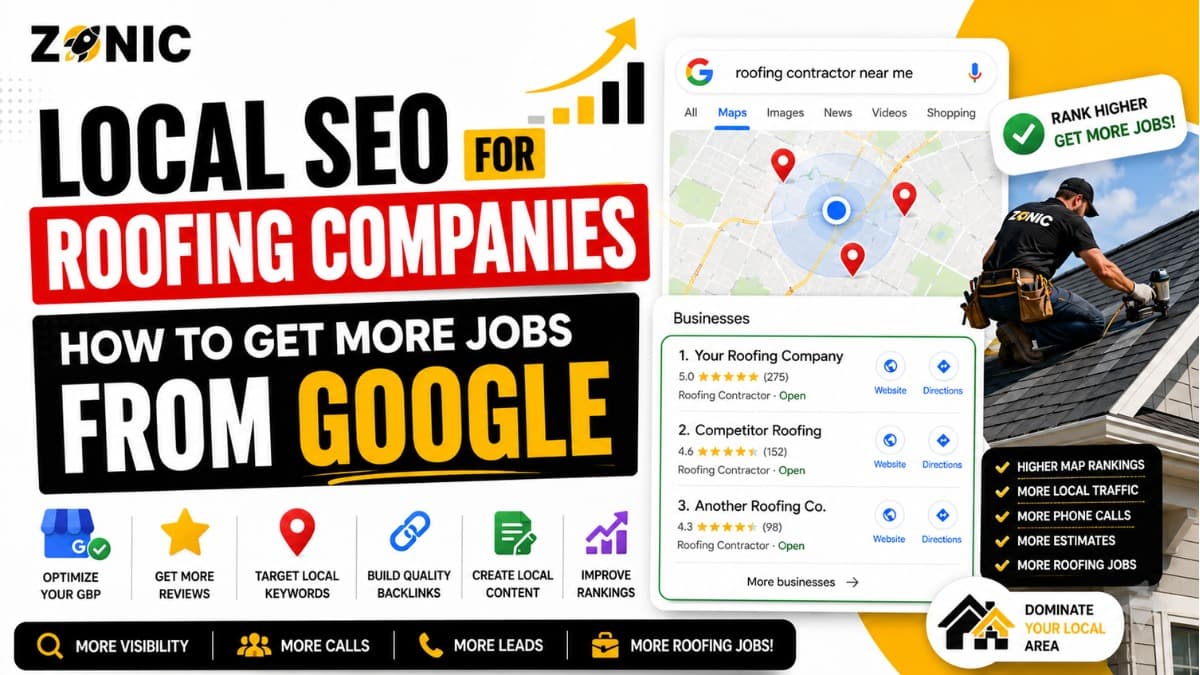
Roofing customers rarely search casually when they need help. A homeowner with a leak, storm damage, missing shingles, clogged roof drainage, or an aging roof usually wants a roofer nearby, fast. That is why Google matters so much for roofing companies.
When someone searches for roof repair, roof replacement, emergency roofer, flat roofing, commercial roofing, or roofing contractor near me, the Google Maps results often get attention before the regular website listings. Customers compare reviews, distance, photos, service areas, hours, and phone numbers quickly. If your roofing company looks trustworthy there, you have a better chance of getting the call.
That is where local SEO roofing companies strategy becomes important.
Local SEO is not just about ranking higher. It is about turning visibility into real roofing jobs. A roofer does not need empty traffic. A roofer needs phone calls, inspection requests, quote forms, emergency calls, and booked projects.
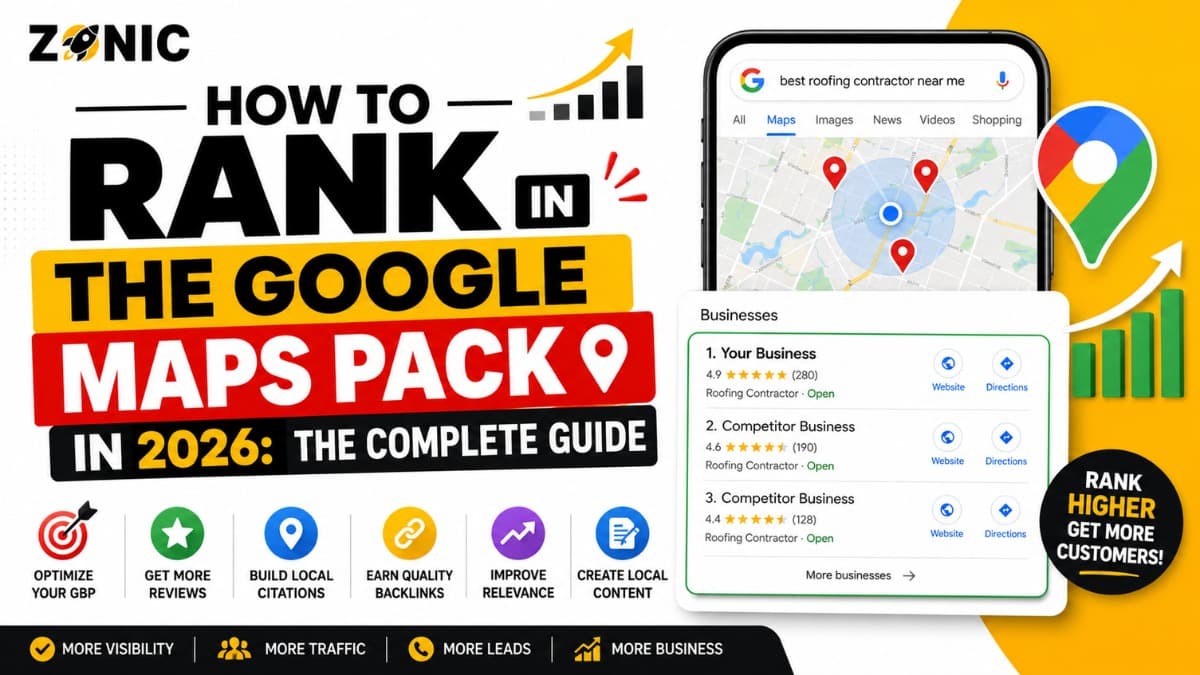
Google says local ranking is mainly based on relevance, distance, and prominence. Relevance means how well your profile matches the search. Distance means how close your business is to the searcher or searched location. Prominence is how well known and trusted your business appears across Google and the wider web. Google also says complete business information and reviews can help local visibility.
This guide explains how roofing contractors can build stronger Google Maps visibility, improve trust, and turn roofing contractor Google Maps leads into real jobs.
Why Local SEO Matters So Much for Roofing Companies
Roofing is a high-intent service. People searching on Google often have an active problem and need a contractor they can trust quickly.
Roofing Searches Often Come From Urgent Problems
Many roofing searches happen during stressful moments. A homeowner may see ceiling stains after rain. A property manager may notice ponding water on a flat roof. A business owner may need storm damage repaired before more interior damage happens.
These customers do not want to read ten pages before calling. They want to know who is nearby, who has good reviews, who answers the phone, and who can inspect the roof.
A strong Google Business Profile can answer those questions before the customer reaches your website.
Google Maps Can Bring Qualified Roofing Leads
For roofing companies, Google Maps leads are valuable because they often come from nearby customers. These users are already looking for a roofing service in their area.
The profile can show your phone number, reviews, photos, services, hours, and website. If that information looks strong, customers may call directly from the profile.
This makes local SEO one of the most important digital marketing channels for roofers.
How Google Decides Which Roofing Companies Show Up
Google does not rank roofing companies by one factor. It uses several signals to decide which businesses are most useful for a local search.
Relevance Helps Google Match Roofing Services
Relevance starts with your Google Business Profile. Your category, services, description, photos, reviews, and website should clearly show that you provide roofing services.
If your company offers roof repair, roof replacement, flat roofing, storm damage repair, inspections, gutters, siding, or emergency service, those services should be clear.
A weak or incomplete profile makes it harder for Google to connect your company to the right searches.
Distance Still Affects Roofing Visibility
Distance matters because customers usually want a roofer who can reach them. A roofing company closer to the searcher often has an advantage.
You cannot fully control distance, but you can make your profile and website stronger for the areas you truly serve.
For service-area roofers, Google says service areas should be specific and accurate, and overall service area boundaries should generally not be more than about two hours of driving time from where the business is based.
Prominence Builds Trust
Prominence includes reviews, links, mentions, directories, and how well known your business appears online. Google says prominence can be influenced by information across the web, including links, articles, directories, and review count and score.
For roofing companies, prominence grows through real reviews, strong website pages, local citations, project photos, community mentions, supplier relationships, and consistent branding.
Optimize Your Google Business Profile for Roofing Jobs
Your Google Business Profile is often the first thing roofing customers see. It should be accurate, complete, and built around real services.
Choose the Right Roofing Category
The primary category should describe your main business. For most roofers, the main category should be closely tied to roofing contractor services.
Do not choose a category only because a competitor uses it. Pick the one that best matches what your company actually does.
Secondary categories can support related services, but they should still be real. If your company also handles gutters, siding, masonry, or skylights, add only what you truly offer.
Add Roofing Services Clearly
Services help customers and Google understand what you provide. Add core roofing services in a clear way.
Examples include roof repair, roof replacement, shingle roofing, flat roofing, emergency roof repair, storm damage roof repair, commercial roofing, roof inspection, gutter repair, skylight repair, and leak detection.
Google says when local customers search for a service you offer, that service may be highlighted on your profile.
Keep Business Details Accurate
Your business name, phone number, website, hours, address, and service areas should match your real company.
Do not add extra keywords to the business name just to rank. A clean, real business name is safer and easier to defend.
Accuracy is important because Google can suspend profiles that violate Business Profile guidelines.
Set Up Service Areas the Right Way
Many roofing companies are service-area businesses. They travel to homes, apartments, commercial buildings, and job sites instead of serving customers at a storefront.
Hide the Address If Customers Do Not Visit
If customers do not visit your business address, it is usually safer to hide the address and show your service area.
Google says if you do not serve customers at your business address, you should remove the address from your Business Profile. It also says service-area businesses can only have one profile for the whole area they serve.
This matters for roofers who work from a home office, warehouse, private office, or dispatch location.
Keep Service Areas Realistic
Do not list every city you want to rank in. Add the areas you actually serve.
A small roofing team should be careful about claiming a huge region if it cannot realistically handle calls there. Service areas should match your real coverage, website content, and business capacity.
A realistic service area builds trust. A stretched service area can look risky and may not help with real leads.
Build Roofing Location Pages That Feel Real
Your website should support your Google Business Profile. Roofing companies need strong service and location pages because customers often search by city, neighborhood, or roof problem.
Write Pages for Real Roofing Services
Each major roofing service should have a useful page. Do not rely on one short services page for everything.
A roof repair page should explain leaks, flashing problems, missing shingles, storm damage, inspection steps, repair options, and when replacement may be needed. A flat roofing page should discuss ponding water, membrane cracks, seams, drains, coatings, and commercial roof concerns.
Service pages help Google understand what you do and help customers feel confident before calling.
Make Location Pages Specific
A good roofing location page should not be a city-name swap. It should include real local details.
Mention common property types, weather concerns, roof materials, drainage issues, storm exposure, permitting concerns, and customer problems in that area.
For example, a city page for an older neighborhood may discuss aging shingle roofs, porch roofs, chimneys, gutters, and ventilation. A commercial district page may focus more on flat roofs, ponding water, roof drains, and maintenance.
Use Reviews to Win More Roofing Calls
Reviews are one of the strongest trust signals for roofing companies. Customers want to know whether your team shows up, communicates clearly, cleans the site, and solves the problem.
Ask Every Happy Customer for a Review
Roofing companies should build a simple review process. After a completed repair, replacement, inspection, or storm damage job, ask the customer to share their honest experience.
Do not offer rewards for reviews. Do not ask for fake reviews. Do not pressure customers to write exact wording.
Real reviews from real customers are safer and more valuable.
Respond Like a Real Roofing Company
Review replies should feel human. Mention the job naturally when appropriate.
For example, you might say, “Thank you for trusting our team with your roof leak repair. We’re glad we could stop the issue before it caused more interior damage.”
Avoid copying the same reply every time. Natural replies show that the business is active and cares about customers.
Add Real Roofing Photos to Build Trust
Photos can help a customer choose your roofing company before they even call. Roofers should use photos to prove real work, real crews, and real results.
Show Before and After Roof Work
Before and after photos help customers understand your workmanship. Show damaged shingles, worn flashing, ponding areas, membrane damage, repaired sections, new shingles, clean gutters, or completed flat roof work.
Do not use stock images. Customers can often tell when photos are generic.
Real project photos build trust and support local SEO.
Show Your Team, Vehicles, and Equipment
Branded trucks, uniforms, ladders, safety equipment, roofing materials, and job-site setups help prove that your company is real.
For service-area roofers, branded vehicle photos can also support trust because customers often meet your team at their property.
Keep photos clean, professional, and accurate.
Improve Website Trust for Roofing Leads
A roofing website should make customers comfortable enough to call. Strong local SEO brings traffic, but trust turns that traffic into jobs.
Show Clear Contact Information
Your phone number should be easy to find. Your service areas should be clear. Your request-estimate forms should be simple.
Do not make customers hunt for your number after they click from Google Maps.
For emergency roofing searches, speed matters. A visible phone number can increase calls.
Add Proof That Reduces Doubt
Roofing customers worry about hiring the wrong contractor. Your website should answer trust questions quickly.
Show licensing, insurance, years of experience, warranties, service areas, project photos, review highlights, financing options if available, and inspection process details.
A customer should feel that your company is real, experienced, and easy to contact.
Build Local Citations for Roofing SEO
Citations are business mentions on directories, industry sites, local platforms, and other trusted places. They help support your business information online.
Keep Name, Address, and Phone Consistent
Your business name, address, phone number, and website should match across Google, your website, directories, social profiles, and major citation sources.
Old phone numbers and old addresses can confuse customers and search engines.
If your roofing company moved, changed numbers, or rebranded, citation cleanup matters.
Use Roofing and Local Directories
Roofing contractors can benefit from accurate listings on trusted business directories, trade directories, local chambers, supplier pages, and contractor platforms.
Do not chase hundreds of low-quality directory links. Focus on sources that make sense for a real roofing company.
Quality and consistency matter more than volume.
Track Roofing Contractor Google Maps Leads
Ranking is only useful if it brings real roofing work. Track the actions that matter, not just visibility.
Watch Calls and Form Requests
Track calls from Google Business Profile, website forms, estimate requests, emergency calls, and booked inspections.
A keyword ranking means little if it does not bring leads.
Roofing companies should know which services bring the best calls. Roof repair, replacement, emergency repair, storm damage, and commercial roofing may each produce different lead quality.
Measure Jobs, Not Just Clicks
The goal is not only more website visits. The goal is more roofing jobs.
Track which calls turned into inspections, which inspections turned into estimates, and which estimates turned into signed work.
This helps you understand which local SEO efforts produce revenue.
Local SEO Mistakes Roofing Companies Should Avoid
Many roofing companies lose Google visibility because of simple mistakes. Some shortcuts may work briefly, but they can create suspension risk or poor lead quality.
Avoid these common problems:
Adding keywords to the Google Business Profile name
Using a fake address or weak virtual office
Showing a public address customers do not visit
Creating duplicate profiles for nearby cities
Choosing unrelated categories
Ignoring reviews after completed jobs
Using stock photos instead of real project photos
Building thin location pages with only city-name swaps
Letting old phone numbers stay on directories
Tracking rankings but not booked jobs
This is the first bullet section. Cleaning these issues can protect the profile and improve lead quality.
A Practical Roofing Local SEO Plan
A roofing local SEO plan should connect Google Business Profile, website content, reviews, photos, citations, and lead tracking into one system.
Follow this plan:
Complete and clean up your Google Business Profile
Use accurate roofing categories and services
Set realistic service areas
Add real roofing project photos
Ask happy customers for honest reviews
Respond to reviews naturally
Build strong roof repair and replacement pages
Create useful city and neighborhood pages
Keep citations consistent
Track calls, inspections, estimates, and booked jobs
This is the second and final bullet section. The best roofing SEO strategy is built around real visibility and real job growth.
How Zonic Helps Roofing Companies Get More Jobs From Google
Zonic helps roofing companies improve local SEO, Google Maps visibility, and lead generation with safer, cleaner strategies.
Google Business Profile Optimization
Zonic reviews your roofing profile name, categories, services, service areas, photos, description, reviews, website link, and profile risks.
The goal is to improve relevance without creating suspension problems.
Roofing Website and Content Support
Zonic helps build stronger service pages, city pages, and roofing content that supports Google Maps visibility.
This includes content for roof repair, roof replacement, flat roofing, storm damage, emergency roofing, inspections, gutters, and related roofing services.
Lead Tracking and Local Growth
Zonic helps roofing companies focus on calls, estimate requests, inspections, and booked jobs.
Ranking is useful, but revenue matters more. The goal is to turn Google visibility into real roofing projects.
Conclusion
Local SEO for roofing companies is not about chasing rankings for the sake of rankings. It is about getting more roofing jobs from Google.
A strong strategy starts with a clean Google Business Profile, accurate categories, realistic service areas, real reviews, real photos, useful roofing service pages, local content, citation consistency, and proper lead tracking.
Roofing customers want trust fast. They compare reviews, photos, distance, services, and phone numbers before they call. If your roofing company looks active, local, and reliable, you have a better chance of winning the job.
If you want more roofing contractor Google Maps leads, Zonic can help you build a stronger local SEO system.
Call Zonic Media today at (302) 726-9736 or visit us at 8 The Green, STE B Dover, Kent, DE 19901 United States for roofing local SEO and Google Maps lead generation support across the USA and NYC.
Frequently Asked Questions
What is local SEO for roofing companies?
Local SEO for roofing companies is the process of improving a roofer’s visibility in Google Search and Google Maps for nearby customers. It includes Google Business Profile optimization, reviews, service pages, location content, citations, and lead tracking.
How can roofers get more jobs from Google?
Roofers can get more jobs from Google by building a complete Google Business Profile, earning real reviews, adding project photos, creating useful roofing service pages, keeping contact details consistent, and tracking calls and estimate requests.
Do Google reviews help roofing companies rank?
Yes. Reviews help customers trust a roofing company, and Google says review count and review score can affect local ranking. Real, detailed, and recent reviews are especially helpful.
Should a roofing company show its address on Google?
A roofing company should show its address only if customers can visit that location. If the roofer travels to customers and does not serve customers at the business address, the address should usually be hidden and service areas should be shown.
What roofing services should be listed on Google Business Profile?
A roofing company can list real services such as roof repair, roof replacement, emergency roof repair, storm damage roof repair, flat roofing, shingle roofing, commercial roofing, roof inspections, gutters, and leak detection.