
Local SEO for Plumbers: How to Get Emergency Calls From Google
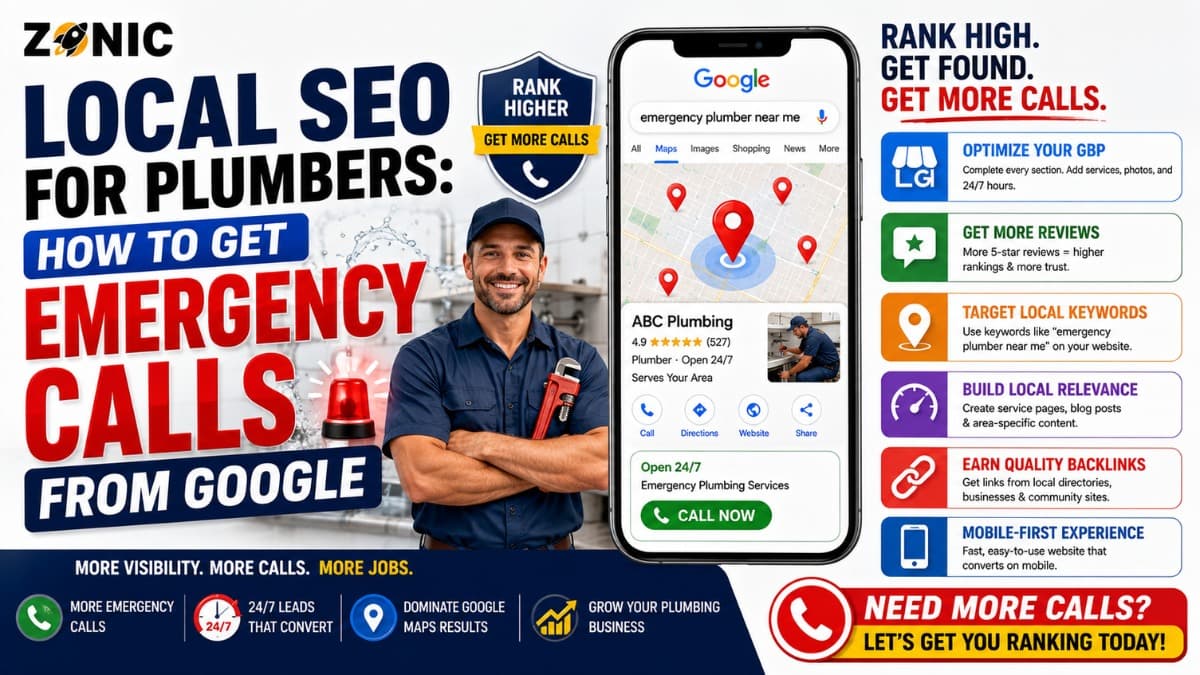
A homeowner dealing with water pouring through a ceiling is not approaching Google the same way someone researching bathroom remodeling ideas does. Neither is a landlord with a backed-up sewer line or a restaurant manager whose drains have stopped working during business hours. When plumbing problems become urgent, people want a nearby company they can reach quickly and trust to handle the problem.
That urgency is what makes local search so valuable for plumbing companies. Searches such as “emergency plumber near me,” “plumber open now,” “burst pipe repair,” and “sewer backup plumber” often come from people who are much closer to making a phone call than someone reading general plumbing advice.
Local SEO for plumbers should therefore do more than increase website traffic. It should put the company in front of customers at the moment they need help, give them enough confidence to make contact, and make the next step obvious.
Google Maps, the Google Business Profile, service pages, location relevance, reviews, and the plumbing website all contribute to that process. The best results come when these pieces work together instead of being optimized separately.
Emergency Plumbing Searches Have a Different Kind of Intent
Plumbing companies serve customers at many stages of the buying process. Someone searching “how often should a water heater be flushed” may be gathering information months before needing a professional. Someone searching “water heater leaking plumber near me” has a very different problem.
Emergency searches are usually shorter, more direct, and more local. The customer may be standing next to a leaking appliance or trying to stop water from spreading through the property while comparing businesses on a phone.
At that point, long explanations are not the first priority. Customers are trying to answer practical questions: Does this plumber serve my area? Is the company available now? Do they handle this particular problem? Do the reviews suggest they respond quickly? Can I call without searching through the website for a phone number?
That means a plumbing company needs content for both research-driven searches and urgent service searches. Educational articles can build visibility and topical authority, while local service pages and the Google Business Profile help capture customers who are already looking for professional help.
The mistake is assuming that all plumbing traffic has equal value. Ten informational visits may produce less immediate business than one qualified emergency call.
Google Business Profile Is Often the First Point of Contact
For many emergency searches, customers can learn a surprising amount about a plumber without opening the company website. Google may show the business name, reviews, hours, phone number, photos, services, website link, and other profile information directly in local results.
That first impression matters because the customer is often comparing several companies quickly.
A profile with an inaccurate phone number, unclear hours, weak reviews, or incomplete service information creates friction at the exact moment someone is ready to make a decision. A properly maintained profile makes the company easier to understand and easier to contact.
Category Selection Sets the Context
The primary category should describe the main business as accurately as possible. For a plumbing company, the category setup needs to make it immediately clear that plumbing is the core service rather than relying on a broad contractor category simply because the company handles several types of work.
Additional categories should represent genuine services or business functions. They are not an opportunity to select every remotely related category in the hope of appearing for more searches.
Categories work best when the rest of the business supports them. The services listed on the profile, website pages, customer reviews, and real-world operation should all tell a consistent story about what the company actually provides.
Your Service Area Should Reflect Where Emergency Calls Can Be Served
Plumbers often cover much larger territories than storefront businesses. A single company may send technicians into several cities, suburbs, neighborhoods, or ZIP codes throughout the week.
Distance remains part of local search, which is why Maps visibility can weaken as searches move farther away from the company’s actual base. A plumber may have excellent visibility in nearby neighborhoods but face much stronger competition on the other side of the metro area.
Service-area settings should therefore be based on real operations rather than wishful ranking targets. If the company cannot reasonably dispatch a technician to an area, especially for urgent work, promoting emergency service there can create poor leads and frustrated customers.
For plumbers operating without a customer-facing storefront, the profile should also be configured as a legitimate service-area business rather than displaying a private home, mailbox, or unstaffed office as though customers can visit it.
Do Not Manufacture Locations to Chase Map Rankings
The proximity problem tempts some plumbing companies to create multiple profiles for cities where they want more leads. Unless those locations genuinely qualify as separate business operations, that strategy creates unnecessary risk.
Virtual offices, rented mailing addresses, duplicate profiles, and unstaffed locations should not become the foundation of a local SEO campaign.
A legitimate plumbing company is better served by strengthening the profile it actually qualifies for, building useful service-area content, earning customer reviews throughout the territory it serves, and developing stronger online prominence.
Local SEO works best when the online footprint reflects the real company.
Build Pages Around the Plumbing Problems That Generate Calls
Someone dealing with a blocked sewer line has different questions from a customer with a failed water heater. A homeowner looking for leak detection does not necessarily want to scroll through information about fixture installations, repiping, and commercial plumbing before finding what applies to the problem.
Dedicated service pages give each important service enough room to address its own search intent.
For many plumbing companies, that may mean creating useful pages around emergency plumbing, drain cleaning, burst pipes, sewer line repair, water heater repair, water heater installation, leak detection, sump pumps, gas line plumbing, repiping, toilet repair, and commercial plumbing where those services are genuinely offered.
An emergency plumbing page, for example, should explain the situations that justify an urgent call, what customers can do before help arrives, which emergencies the company handles, the territory covered, and how to contact the team quickly. A sewer repair page may need to discuss warning signs, inspection methods, repair options, property disruption, and what happens after the problem is identified.
When each page answers the questions associated with that particular service, it becomes more useful to both searchers and the business.
Location Pages Need a Reason to Exist
Location pages can be valuable for plumbing companies serving several communities, but only when there is something meaningful to say about each area.
Changing “Brooklyn plumber” to “Queens plumber” while leaving every other paragraph unchanged does not create genuinely local content. It creates a collection of nearly identical pages.
Apartment-heavy neighborhoods may produce different access and plumbing concerns than suburban communities dominated by detached homes. Older properties can have different pipe, sewer, drainage, and fixture conditions from newer developments. Commercial corridors may generate different emergency calls from primarily residential neighborhoods.
The location name does not need to appear in every paragraph. In fact, repeatedly inserting the city just to reinforce a keyword can make the writing feel artificial. The better test is whether someone who lives or manages property there would recognize that the page was actually created for that market.
Reviews Can Decide Who Gets the Emergency Call
They may never have heard of the companies appearing in Maps, so reviews become one of the fastest ways to compare them. Ratings provide an immediate signal, while the written feedback shows what happened during actual service calls.
Plumbing customers tend to care about practical details. Did someone answer the phone? Did the plumber arrive when expected? Was the issue explained clearly? Was pricing communicated before work began? Did the technician protect the property? Was the repair successful?
A steady process for requesting honest reviews after completed jobs can help create a more useful picture of the business over time. Customers should be allowed to describe their own experiences without being told which rating, service keyword, or wording to use.
Review responses deserve the same customer-focused approach. Thank people for positive feedback and address criticism professionally when necessary. The response is visible to future customers, so it should sound like a business speaking to people rather than an SEO exercise.
Photos, Hours, and Profile Details Should Help Someone Make a Decision
A plumbing company can show branded service vehicles, technicians, tools, water heater installations, pipe repairs, drain equipment, completed work, and legitimate business facilities where appropriate. These images help a customer see that there is a real operation behind the listing.
Hours become even more important when emergency service is advertised. If the profile says the company is available around the clock, the business needs a process for handling those calls. Advertising availability that does not exist may produce clicks, but it also produces bad customer experiences.
Services, appointment links, phone numbers, and other profile details deserve regular review for the same reason. The listing should represent the company customers can actually reach today, not the version of the business that existed two years ago.
Calls Matter More Than Cosmetic Engagement
Phone calls, website visits, forms, bookings, and other customer actions are important because they show whether local visibility is producing opportunities.
The most useful question is not whether a profile received more clicks this month. It is whether those interactions resulted in qualified plumbing jobs.
A spike in calls from areas the company does not serve is not necessarily a success. Neither is traffic to a drain cleaning page if nobody contacts the business.
Track Which Searches Become Plumbing Revenue
Many plumbing companies know approximately where they rank but have little idea which parts of local search are producing actual work.
That makes it difficult to invest intelligently.
Call tracking, form tracking, Google Business Profile performance data, analytics, and CRM information can help connect search visibility with booked jobs. The business should be able to distinguish between an organic website lead, a Maps call, a paid lead, and a referral whenever possible.
Lead quality adds another layer.
A $100 minor service call and a major sewer replacement should not necessarily be valued the same way. Neither should an inquiry from outside the service area and a qualified emergency customer five minutes from an available technician.
Tracking outcomes can reveal useful patterns. Perhaps water heater pages generate fewer leads but higher revenue. Maybe one suburb produces a large number of calls that rarely become booked work. Another location page might attract fewer visitors yet produce consistently valuable jobs.
Those insights help decide where future SEO effort belongs.
Where Plumbing Companies Commonly Lose Local Leads
Some local SEO problems are technical, but many are basic business information problems that have been ignored for too long.
A plumbing company should review whether it is:
Using a category that accurately represents the core business
Displaying a legitimate location or properly configured service area
Keeping phone numbers and operating hours accurate
Creating dedicated pages for services that actually generate revenue
Publishing useful local pages instead of city-swapped duplicates
Asking real customers for honest reviews after successful jobs
Keeping important business information consistent across major platforms
Showing authentic photos of the company and its work
Making the phone number easy to find on mobile devices
Tracking which calls and forms turn into booked plumbing jobs
None of these changes works in isolation. Together, they make it easier for search engines to understand the company and easier for customers to choose it.
What Better Local SEO Looks Like for a Plumbing Company
The first has a Google Business Profile with old photos, questionable hours, a broad category, and a homepage that tries to cover every service. Its reviews are several years old, and the website uses nearly identical pages for ten cities.
The second has an accurate profile, recent genuine reviews, clear emergency availability, dedicated pages for its major services, useful content for the communities it actually serves, and tracking that shows which calls become jobs.
The second business is not relying on one clever Maps trick. It simply gives Google and customers more reasons to understand and trust the company.
How Zonic Helps Plumbing Companies Generate Better Local Leads
Zonic approaches plumbing local SEO by looking at the full path from search visibility to booked work.
The process can include reviewing Google Business Profile categories, services, service-area setup, location accuracy, reviews, photos, duplicate listings, and other information that affects how customers discover the business.
The website is evaluated alongside the profile. Emergency plumbing pages, drain services, sewer work, water heater content, local landing pages, mobile usability, technical SEO, internal navigation, and conversion paths all influence whether search visibility turns into an inquiry.
Competitor research and lead tracking then help identify where the actual opportunity exists. One plumbing company may need better map visibility, while another may already rank well but lose business because its website or call handling creates too much friction.
The point is not simply to increase traffic. It is to create more opportunities for qualified customers in the areas and services that matter to the business.
Conclusion
Local SEO for plumbers works best when it is built around how real customers search during real plumbing problems.
A person dealing with a burst pipe, overflowing drain, failed water heater, or sewer backup wants a nearby company that looks legitimate, handles the problem, answers the phone, and has evidence that other customers trust it.
Your Google Business Profile needs to make those answers easy to find. Your website needs to support the services and locations you claim to cover. Reviews should reflect real customer experiences, and service-area expectations should remain realistic.
Most importantly, measure the work by what reaches the business: qualified calls, booked appointments, emergency jobs, installations, and revenue.
If your plumbing company is getting visibility but not enough qualified calls, Zonic can review your Google Business Profile, plumbing website, local competition, service pages, and lead flow to identify where opportunities are being lost.
Call Zonic Media at (302) 726-9736 or visit 8 The Green, Suite B, Dover, DE 19901 to discuss local SEO opportunities for your plumbing business.