What Is Local SEO? The Plain-English Guide for Small Business Owners
If you run a small business, you have probably heard people say you need local SEO. Maybe an agency mentioned it. Maybe a competitor started showing up higher on Google Maps. Maybe your website gets traffic, but the phone is not ringing enough.
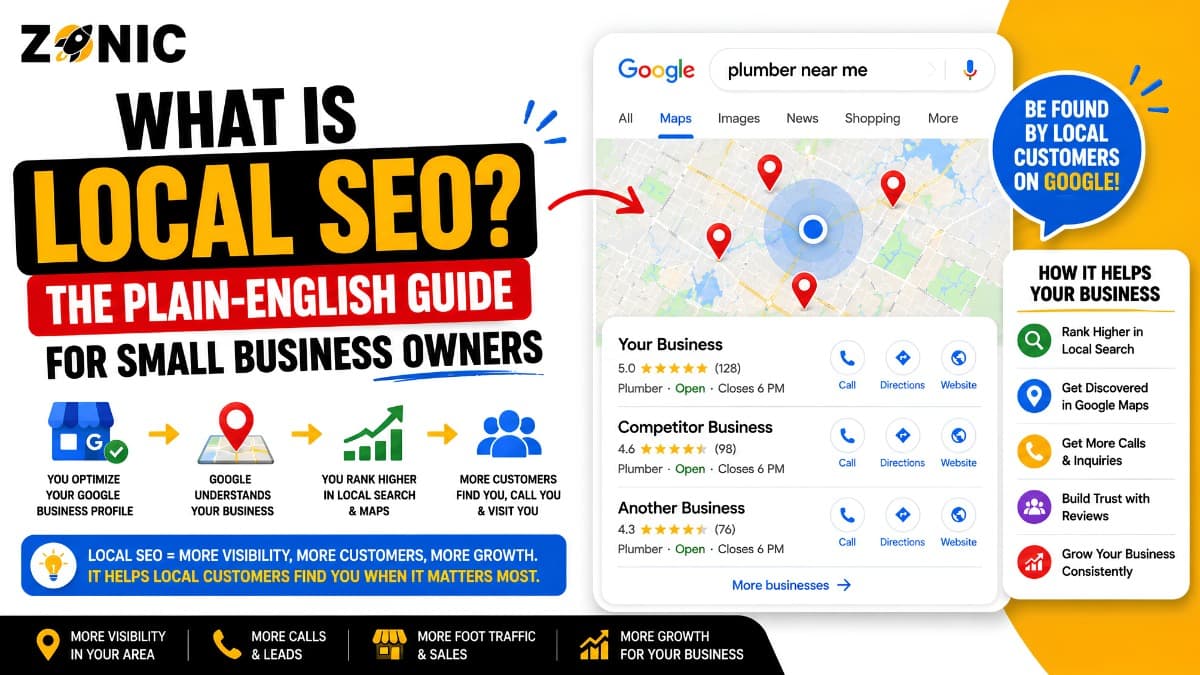
Local SEO is the process of helping your business show up when nearby customers search on Google for the products or services you offer. It helps your company appear in Google Search, Google Maps, the local pack, and local organic results when people search with location-based intent.
A customer might search for “roof repair near me,” “dentist in Brooklyn,” “plumber open now,” “best HVAC company near me,” or “local SEO agency for small business.” Local SEO helps Google understand your business, where you serve customers, what you offer, and why people should trust you.
For small business owners, local SEO is not about confusing technical tricks. It is about making your business easier to find, easier to understand, and easier to contact when local customers are ready to act.
What Is Local SEO in Plain English?
Local SEO means improving your online presence so people in your area can find your business when they search for your service. It connects your business with nearby customers who already need what you sell.
Local SEO Helps You Show Up Near Customers
When someone searches for a local service, Google tries to show useful nearby options. That may include a map pack, business profiles, review ratings, phone numbers, directions, and regular website results.
Local SEO helps your business appear in those places.
For example, if someone searches “emergency roofer near me,” Google needs to know which roofing companies are nearby, which ones provide emergency roofing, which ones are trusted, and which ones have complete business information.
A business with a complete Google Business Profile, strong reviews, accurate service pages, and consistent contact details has a better chance of being considered.
Local SEO Is Different From Regular SEO
Regular SEO can help a website rank for broad topics. Local SEO focuses on searches tied to a specific area.
A national blog might rank for “how to fix a roof leak.” A local roofing company wants to rank for “roof leak repair near me” or “roof repair in Queens.”
The difference is intent. Local searches usually come from people who want a nearby business, not just general information.
Why Local SEO Matters for Small Businesses
Small businesses need visibility where customers are already looking. Local SEO helps you compete for calls, visits, appointments, estimates, and bookings from people in your service area.
Customers Use Google Before They Call
Many customers check Google before contacting a business. They look at reviews, photos, hours, services, location, website, and how easy it is to call.
If your business does not appear, or if your profile looks weak, customers may choose someone else.
A strong local presence helps customers trust you faster. They can see that your business is real, active, and relevant to their needs.
Local SEO Can Bring Better Leads
Local SEO often brings high-intent leads. These are people searching for a nearby solution.
A customer searching “AC repair near me” may need help today. A customer searching “family dentist in Dover” may be ready to book. A customer searching “roof replacement contractor Brooklyn” may be comparing companies for an estimate.
These searches can turn into real business because the person already has a need.
How Google Decides Which Local Businesses to Show
Google does not choose local businesses randomly. It uses signals that help decide which results are most useful for the searcher.
Relevance Means Matching the Search
Relevance is about whether your business fits what the customer searched for.
Your Google Business Profile category, services, description, reviews, website pages, photos, and content help Google understand what you offer.
If your profile and website clearly show that you provide plumbing repair, Google can better match you with plumbing-related searches.
If your business details are vague, Google has less information to work with.
Distance Means Location Still Matters
Distance matters because Google wants to show nearby options. If someone searches from one side of a city, results may be different from someone searching across town.
You cannot fully control distance unless your real business location changes.
But you can make your profile and website strong enough to compete better within your realistic service area.
Prominence Means Trust and Reputation
Prominence is about how well known and trusted your business appears. Google says prominence can be based on information across the web, including links, articles, directories, review count, and review score.
For a small business, prominence can grow through real reviews, local mentions, citations, helpful website content, backlinks, and consistent business information.
The Main Parts of Local SEO
Local SEO is not one task. It is a group of connected pieces that help customers and Google trust your business.
Google Business Profile
Your Google Business Profile is one of the most important parts of local SEO. It can appear on Google Search and Google Maps with your business name, reviews, phone number, hours, website, photos, address or service area, and services.
Google says claiming your Business Profile can help manage how your business appears on Google Maps and Google Search.
A complete profile makes it easier for customers to contact you without visiting your website first.
Website Pages
Your website supports your local visibility. It should clearly explain your services, locations, process, trust factors, and contact options.
A small business website should not only say “we provide quality service.” It should explain what you do, where you do it, and why customers should call.
Service pages and location pages are especially important for local SEO.
Reviews
Reviews help customers decide if they can trust you. They also help Google understand customer experience and business prominence.
Real, recent, detailed reviews are valuable because they show that people are using your business and talking about your services.
Responding to reviews also shows activity and care.
Citations and Local Listings
Citations are online mentions of your business name, address, phone number, and website. They can appear on directories, local sites, industry platforms, social profiles, and business listing websites.
Consistent citations help reduce confusion.
If one directory shows an old phone number and another shows an old address, customers and search engines may not know which information is correct.
Google Business Profile Basics for Small Business Owners
Your Google Business Profile should be accurate, complete, and active. This is often the first thing customers see when they find your business.
Use the Right Business Name
Use your real business name. Do not add extra keywords, city names, taglines, or services unless they are truly part of your real-world name.
A keyword-stuffed name may look tempting, but it can create suspension risk and damage trust.
Your business name should match your website, signage, documents, and customer-facing materials.
Choose the Right Category
Your primary category tells Google what your business mainly is.
A roofer should choose a roofing-related category. A dentist should choose a dental category. A law firm should choose the correct legal category.
Do not pick a category just because it has traffic. Pick the category that accurately describes your business.
Add Services, Hours, Photos, and Contact Details
Your profile should include your phone number, website, hours, services, description, photos, and address or service area.
Google says providing complete and detailed business information helps it better understand your business and match your listing to relevant searches.
The profile should answer basic customer questions quickly.
Website SEO for Local Businesses
Your website gives customers deeper information after they find your profile or search result. It also helps Google understand your services and service areas.
Build Service Pages
Each main service should have its own useful page.
A roofing company may need pages for roof repair, roof replacement, flat roofing, storm damage repair, emergency repair, and inspections. A dentist may need pages for cleanings, implants, emergency dentistry, cosmetic dentistry, and family dentistry.
Service pages should explain the problem, the service, the process, benefits, trust factors, and next step.
Build Local Pages Where They Make Sense
If your business serves multiple cities or neighborhoods, local pages can help. But they should be written for real customers.
Do not copy the same page and change only the city name.
A useful local page should mention real local needs, property types, service concerns, customer problems, and helpful details for that area.
Make Contact Easy
Local SEO brings people to your website. Your website must make it easy to contact you.
Your phone number should be visible. Forms should be simple. Calls to action should be clear.
A page that ranks but does not convert is not doing its full job.
Reviews and Reputation in Local SEO
Reviews can make or break local lead generation. Customers often compare businesses based on review count, rating, recency, and review wording.
Ask Real Customers for Reviews
Build a simple review request process. Ask customers after a completed job, appointment, purchase, or service visit.
Do not offer money or rewards for reviews. Do not ask for fake reviews. Do not pressure customers to write exact words.
A steady flow of honest reviews is better than a sudden burst of suspicious reviews.
Respond to Reviews Naturally
Respond to reviews like a real business owner. Thank happy customers. Stay calm with unhappy customers. Invite people to contact you when a problem needs more attention.
Avoid copying the same reply every time.
A thoughtful review response can help future customers trust you.
Local Citations and NAP Consistency
NAP means name, address, and phone number. These details should be consistent across your online presence.
Why Consistency Matters
If your Google Business Profile shows one phone number, your website shows another, and directories show an old address, customers may get confused.
Google may also have less confidence in your business information.
Consistent NAP details make your business easier to verify and contact.
Where Citations Appear
Citations can appear on business directories, industry sites, local chambers, social profiles, map platforms, review sites, and association pages.
You do not need every directory on the internet. You need accurate listings on trusted and relevant places.
Quality and consistency matter more than volume.
Local SEO Checklist for Small Business Owners
Local SEO becomes easier when you treat it like a practical checklist. Start with the basics before chasing advanced tactics.
Use this simple checklist:
Claim and verify your Google Business Profile
Use your real business name
Choose the right primary category
Add accurate services and hours
Upload real business photos
Ask happy customers for reviews
Respond to reviews naturally
Build useful service pages
Create local pages for real service areas
Keep name, address, and phone consistent
This is the first bullet section. These basics can help small businesses build a cleaner and more trusted local presence.
Local SEO vs Traditional Advertising
Local SEO works differently from paid ads, flyers, mailers, or referral-only marketing. It builds visibility where customers are already searching.
Marketing Method | How It Works | Best Use |
Local SEO | Helps you appear in Google Search and Maps for nearby searches | Long-term local visibility and lead generation |
Google Ads | Places paid ads above or near search results | Fast visibility and controlled campaigns |
Social Media | Builds awareness and engagement | Brand trust, updates, and community connection |
Flyers or Mailers | Reaches people in a selected area | Local promotions and brand reminders |
Referrals | Comes from past customers or partners | High-trust lead source |
Why Local SEO Has Long-Term Value
Paid ads can work quickly, but visibility often stops when the budget stops. Local SEO takes time, but the work can keep supporting your business.
A strong profile, useful website pages, good reviews, and consistent citations can keep helping you attract customers over time.
Why Local SEO and Ads Can Work Together
Local SEO does not mean you should never run ads. Many businesses use both.
Ads can help with fast traffic. Local SEO can build trust and long-term visibility. Together, they can support a stronger lead generation system.
Common Local SEO Mistakes Small Businesses Make
Many small businesses struggle with local SEO because they overlook simple details. These mistakes are common, but they can usually be fixed.
Avoid these problems:
Incomplete Google Business Profile
Wrong business category
Keyword-stuffed business name
Old phone number on directories
Website does not list services clearly
No real photos
Few or outdated reviews
Duplicate listings
Thin location pages
No call tracking or lead tracking
This is the second and final bullet section. Fixing these issues can often improve local visibility and customer trust.
How Long Does Local SEO Take?
Local SEO is not instant, but it can build steady results. The timeline depends on competition, profile quality, website strength, reviews, citations, and your market.
Some Fixes Help Quickly
Basic updates can help customers immediately. Correct hours, better photos, visible phone numbers, and complete services can improve the customer experience right away.
These changes may not create instant rankings, but they make your profile more useful.
Bigger Results Take Time
Ranking improvements usually take time, especially in competitive markets. A new business with few reviews and a weak website may need months of steady work.
The goal is to build trust signals that last. Local SEO is a long-term asset, not a one-day setup.
How to Measure Local SEO Success
Local SEO should be measured by real business outcomes, not only rankings.
Track Calls and Forms
Track phone calls, contact forms, appointment requests, bookings, estimate requests, and direction requests.
A business may rank for a keyword, but the real question is whether that ranking brings customers.
Lead tracking helps you understand what is working.
Track Service and Location Performance
Look at which services and locations bring the best leads.
A roofing company may get more calls from roof repair pages. A dentist may get more bookings from emergency dentistry pages. A law firm may get more leads from one practice area than another.
Use that information to improve content and strategy.
How Zonic Helps Small Businesses With Local SEO
Zonic helps small businesses improve Google visibility, profile trust, website content, and local lead generation.
Google Business Profile Optimization
Zonic reviews your profile name, categories, services, photos, reviews, hours, website link, address setup, service area, and profile health.
The goal is to make your profile more complete, accurate, and lead-ready.
Local SEO Content and Website Support
Zonic helps build service pages, location pages, and blog content that explain your business clearly.
The content is written for real customers and structured to support local search.
Lead Growth and Tracking
Zonic helps businesses focus on calls, forms, appointments, estimate requests, and booked jobs.
Conclusion
Local SEO is the process of helping nearby customers find your business on Google when they search for your products or services. It includes your Google Business Profile, website pages, reviews, photos, citations, local content, and business information across the web.
For small business owners, local SEO is not about complicated jargon. It is about showing Google and customers that your business is real, relevant, nearby, and trustworthy.
Start with the basics. Complete your Google Business Profile. Use the right category. Add real services and photos. Ask for honest reviews. Build useful service pages. Keep your business information consistent. Track the leads that come from Google.
If you want local SEO explained small business style and need help applying it to your own company, Zonic can help.
Call Zonic Media today at (302) 726-9736 or visit us at 8 The Green, STE B Dover, Kent, DE 19901 United States for local SEO and Google Business Profile support across the USA and NYC.